Comparison of Different Methods for Estimating Cardiac Timings: A Comprehensive Multimodal Echocardiography Investigation
Executive Summary
This study evaluates the accuracy of cardiac timing intervals derived from seismocardiography (SCG), phonocardiography (PCG), and impedance cardiography (ICG) compared to multimodal echocardiography (M-mode, Doppler, and TDI) as the clinical gold standard. Using data from 86 healthy adults and over 2,120 cardiac cycles, SCG demonstrated superior precision in estimating pre-ejection period (PEP) and total systolic time (TST) compared to ICG and PCG. The findings suggest SCG and PCG are promising candidates for integration into wearable devices for non-invasive cardiac monitoring.
Answer Machine Insights
Q: How accurate is SCG in estimating pre-ejection period (PEP)?
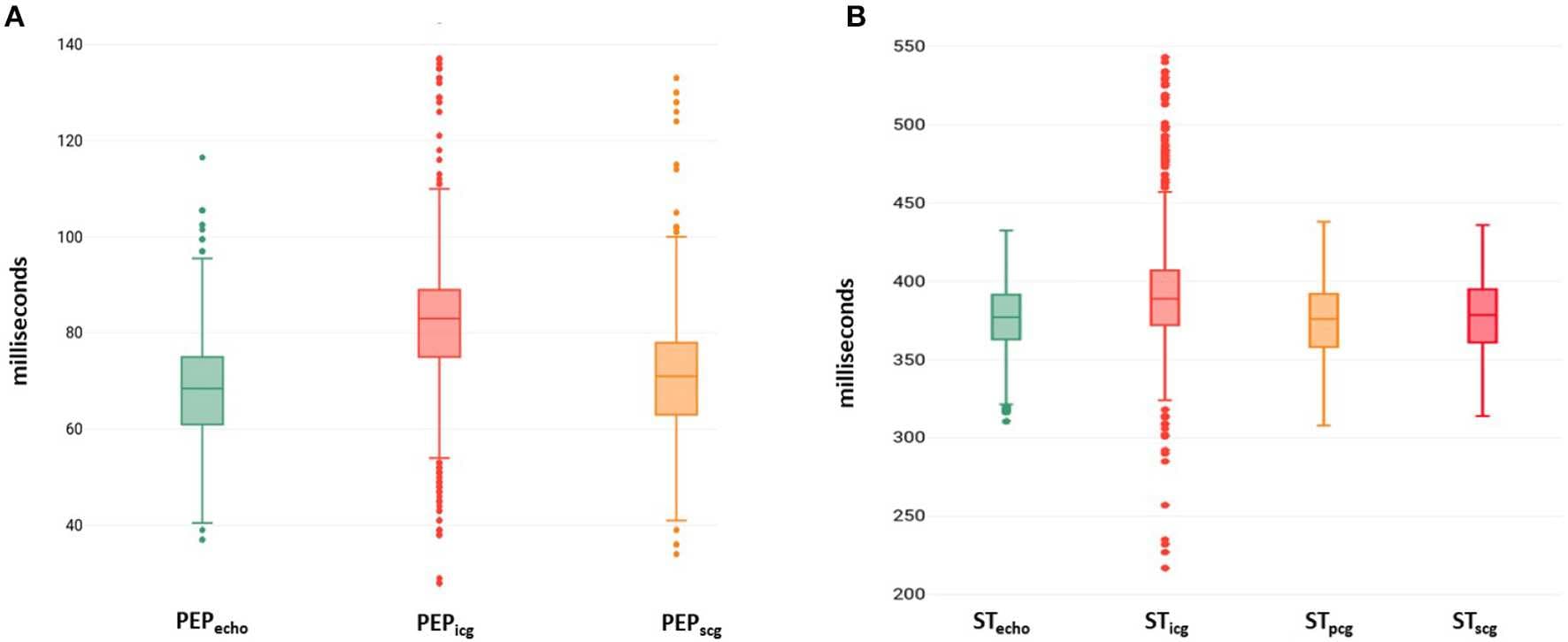
SCG annotations for PEP fell within echocardiography ranges for 86% of cardiac cycles, with an average error of 12.8%.
For 86% of the cycles, SCG AO took place in the echocardiography AVO range. For PEPscg estimation, the average error was about 12.8%.
Q: Which method showed the highest reliability for total systolic time (TST) estimation?
SCG demonstrated the highest reliability for TST estimation, with an ICC of 0.97 and an error of 1.4%.
ICC between TSTecho and TSTscg were estimated as 0.97, with an average error of 1.4%.
Key Results
86% of SCG annotations for pre-ejection period (PEP) fell within echocardiography ranges, compared to 47% for ICG.
SCG demonstrated an average error of 12.8% for PEP estimation, significantly lower than ICG's 25.5%.
Visual Evidence
Clinical Snapshot
Evidence Rating
Relevance
high Priority