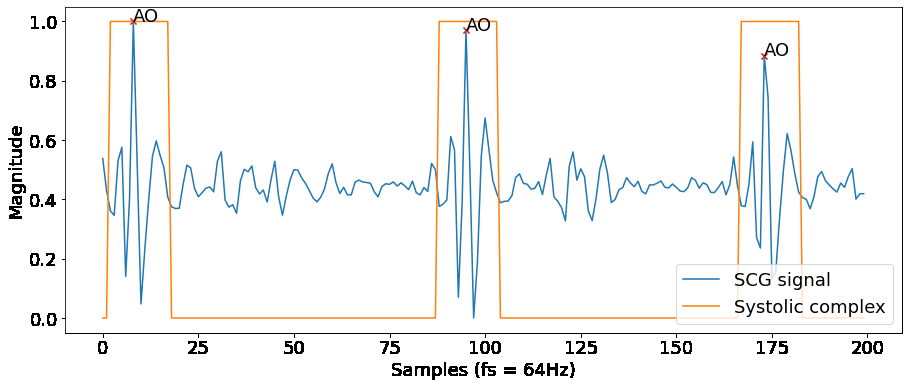
Quick Conclusion: S029 is a critical piece for OpenSCG’s technical strategy. It addresses the 'reality gap'—the fact that models trained on clean lab data often fail in the field. By validating personalization and multi-sensor fusion, it provides a direct scientific foundation for OpenSCG’s 'U-Net v3' and adaptive processing pipeline.
📊 Key Accuracy Metrics
| Metric | Result |
|---|---|
| F1-score (Controlled) | 0.92 to 0.94 |
| F1-score (Real-world z-axis) | 0.88 |
| F1-score (Real-world personalized) | 0.93 to 0.95 |
| Model | U-Net for binary semantic segmentation |
🔍 Study Analysis
Objective & Population
Deep Learning / Cross-dataset Experimental Analysis. Cohort: Healthy subjects (CEBS, MEC) and subjects in daily life (BioPoli) (N=72).
What it Supports
The study supports the use of multi-channel (accelerometer + gyroscope) deep learning to overcome the challenges of 'domain shift' in real-world SCG monitoring. It proves that personalization (fine-tuning a model on a small amount of a user's own data) significantly boosts accuracy to lab-like levels (~95%).
What it Does Not Support
The study does not support the use of 'out-of-the-box' lab-trained models for reliable real-world monitoring without some form of adaptation or multi-sensor integration.
🛠 Technical Context
- DOI: 10.48550/arXiv.2408.04439
- Authors: Craighero et al.
- Confidence Tier: Supporting