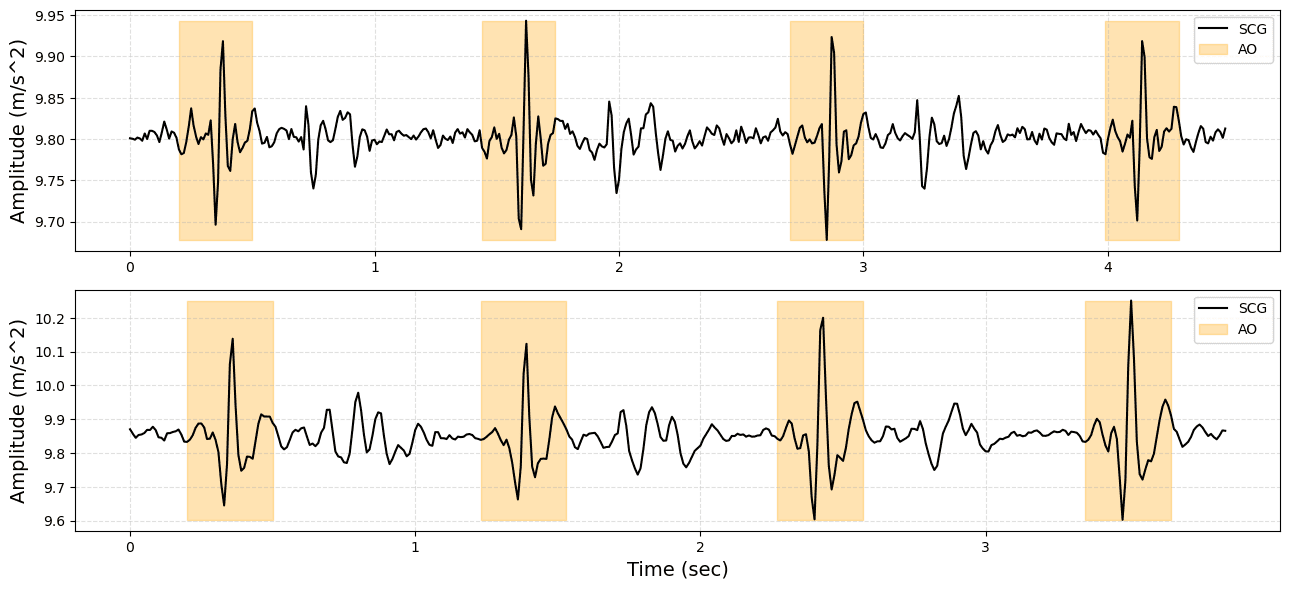
Quick Conclusion: Demonstrates the effectiveness of advanced neural networks in processing heterogeneous and noisy smartphone sensor data.
📊 Key Accuracy Metrics
| Metric | Result |
|---|---|
| Sensitivity | 99.80% |
| Positive Predictive Value (PPV) | 99.09% |
| Total Data collected | 7,700+ hours |
| Model | U-Net v3 with Multi-scale convolutions and Attention Gates |
🔍 Study Analysis
Objective & Population
Technical Development / Field Study. Cohort: Volunteers using consumer smartphones (7,700+ hours of data) (N=100).
What it Supports
Validates robust AO peak detection in noisy real-world data (7,700+ hours) with 99.8% sensitivity using U-Net v3.
What it Does Not Support
The study does not provide direct validation for the diagnosis of specific rhythmic disorders (like AFib) in this paper, but rather provides the robust detection framework necessary for such diagnoses.
🛠 Technical Context
- DOI: 10.48550/arxiv.2601.13926
- Authors: Golenderov et al.
- Confidence Tier: Supporting