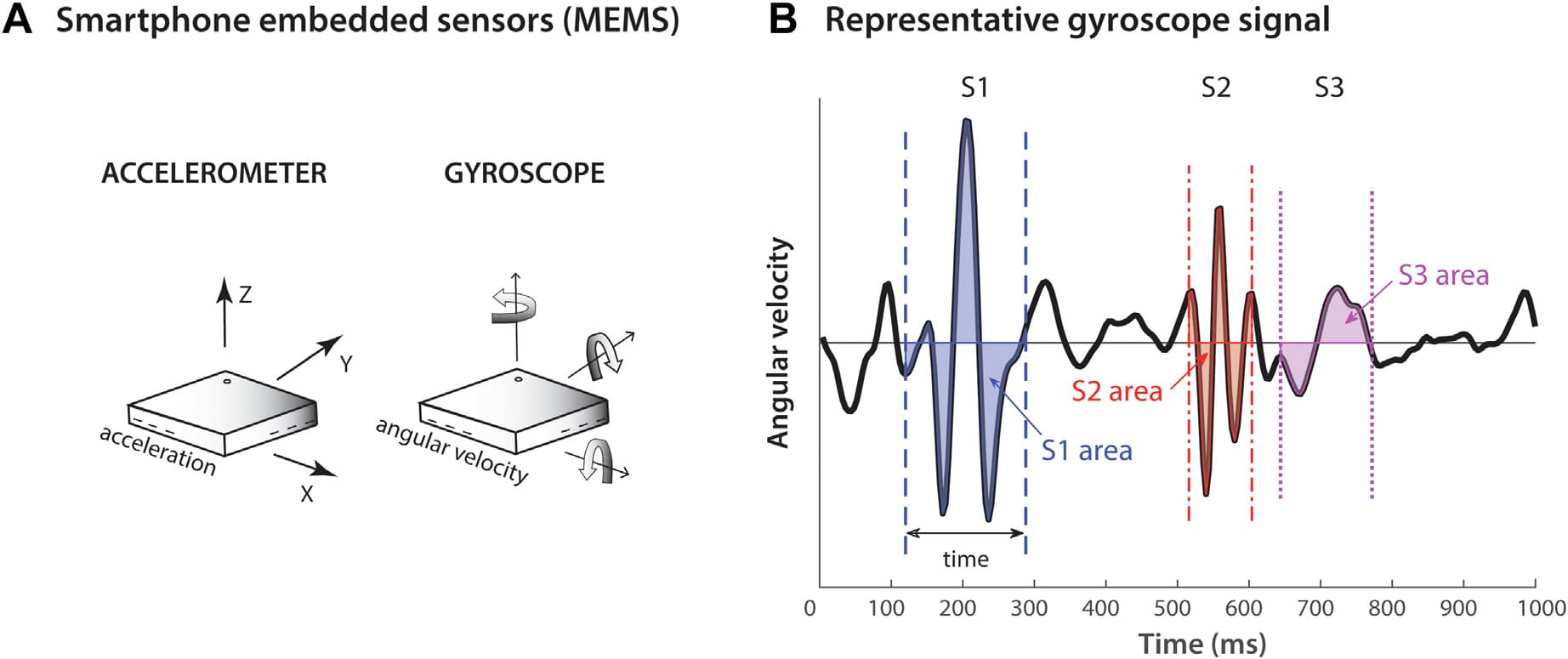
Quick Conclusion: Validates the use of built-in smartphone MEMS for identifying heart failure patients in both inpatient and ambulatory settings.
📊 Key Accuracy Metrics
| Metric | Result |
|---|---|
| AUC (Combined HF) | 0.95 |
| Sensitivity | 85% |
| Specificity | 90% |
| Accuracy | 89% |
| Positive Likelihood Ratio | 8.50 |
| Negative Likelihood Ratio | 0.17 |
🔍 Study Analysis
Objective & Population
Multicenter Validation Study / Logistic Regression with Bootstrap Aggregation. Cohort: 217 participants with HF (174 inpatients, 172 outpatients - pooled), 786 control subjects (N=1003).
What it Supports
Reports an AUC of 0.95 and 89% accuracy for detecting symptomatic heart failure using smartphone-based sensors in a multicenter study (N=1003).
What it Does Not Support
The study does not support the replacement of standard biomarkers (NT-proBNP) but suggests smartphone SCG as a powerful screening and monitoring tool, especially for individuals at intermediate risk.
🛠 Technical Context
- DOI: 10.1016/j.jchf.2024.01.022
- Authors: Mona Haddad et al.
- Confidence Tier: Cornerstone