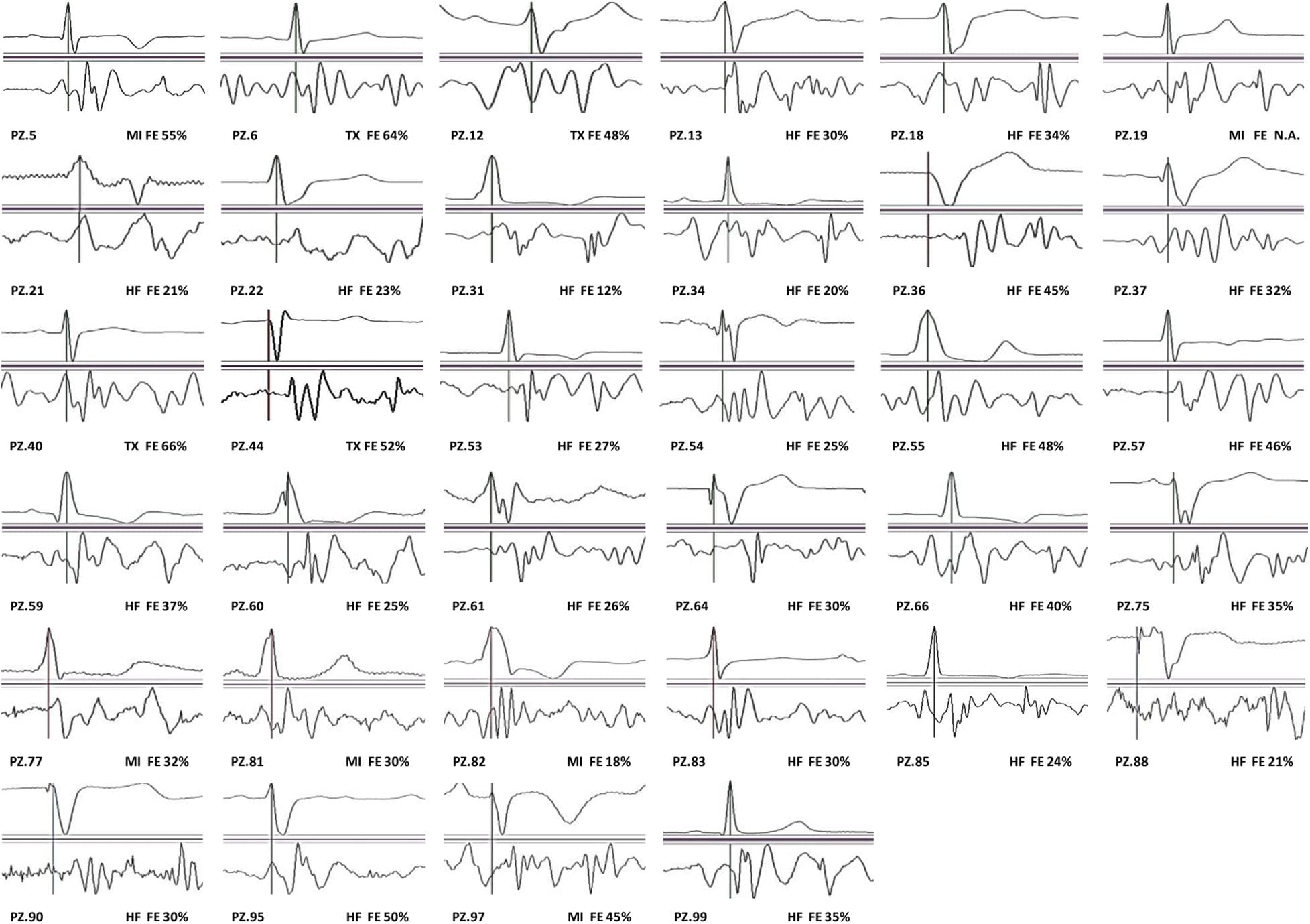
Quick Conclusion: Identifies challenges in applying standard SCG analysis to patients with heart disease, noting signal distortion in 38% of the cohort.
📊 Key Accuracy Metrics
| Metric | Result |
|---|---|
| Traditional (T) shape prevalence | 62% of all patients (79% in MI, lower in HF/TX) |
| AO Mean Difference | -1.3 ms (SD 18.3 ms) |
| MC Mean Difference | -17.1 ms (SD 26.2 ms) |
| Accuracy range | 76-81% for AO, AC, MO within healthy reference range |
🔍 Study Analysis
Objective & Population
Pilot Study / Validation in Clinical Population. Cohort: 90 patients (Myocardial Infarction, Heart Failure, Heart Transplant) (N=90).
What it Supports
Observes that 62% of cardiac patients retain traditional SCG morphology suitable for standard peak detection.
What it Does Not Support
The study does not support the universal application of standard SCG peak detection in all cardiac patients without preliminary verification. Specifically, patients with heart failure or heart transplants may have distorted waveforms that make automated peak detection inaccurate or impossible.
🛠 Technical Context
- DOI: 10.3389/fphys.2022.825918
- Authors: Işilay Zeybek, Marco Di Rienzo et al.
- Confidence Tier: Supporting