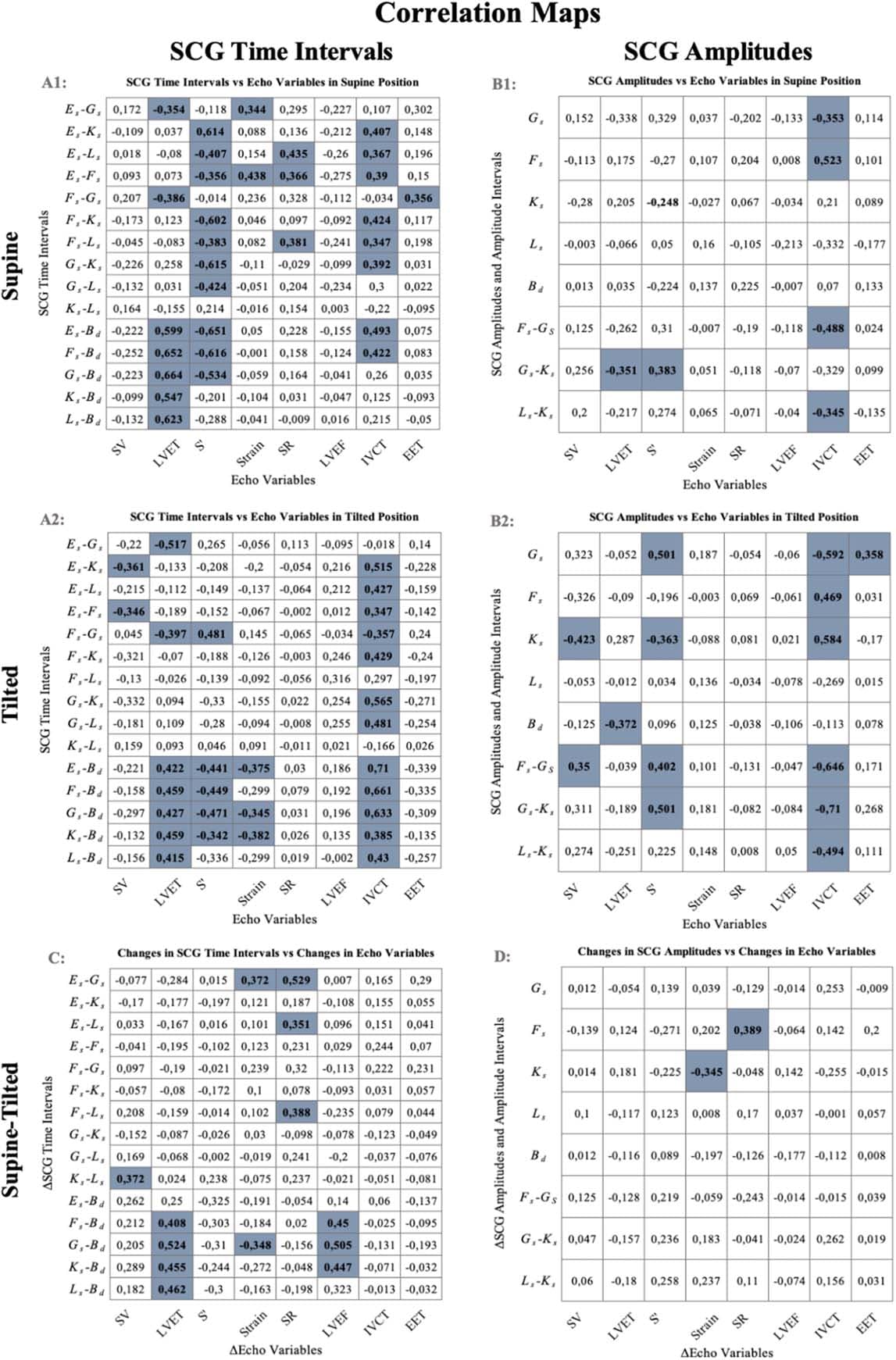
Quick Conclusion: S012 is a very recent (2024) validation of SCG’s sensitivity to hemodynamic shifts. Crucially, it found that SCG was more sensitive to small changes in preload than traditional ultrasound, highlighting its potential for early detection of volume overload in heart failure patients at home.
📊 Key Accuracy Metrics
| Metric | Result |
|---|---|
| Significant correlations | LVET, IVCT, S', strain, SR, SV, and LVEF |
| Preload sensitivity | Most systolic SCG intervals significantly prolonged in tilted position |
| SCG vs Echo sensitivity | Systolic SCG variables more sensitive to preload alterations than Echo |
🔍 Study Analysis
Objective & Population
Observational / Preload Challenge Study. Cohort: 34 healthy subjects (equal sex distribution), Age 20-80 (N=34).
What it Supports
The study supports the direct correlation between SCG systolic waveform features and gold-standard echocardiographic variables. It proves that SCG is highly sensitive to changes in 'preload' (the volume of blood entering the heart), which is a critical marker for heart failure management.
What it Does Not Support
The study does not provide diagnostic thresholds for heart disease, as it was conducted on healthy volunteers. It also does not support the replacement of Echo, but rather its use as a manageable supplement.
🛠 Technical Context
- DOI: 10.1088/2057-1976/ad6a67
- Authors: Christoffer Mejling Kolind et al.
- Confidence Tier: Supporting