Developing a Protocol for Aligning and Correlating Seismocardiography with Echocardiography
Executive Summary
This study introduces a standardized echocardiography protocol to align and correlate seismocardiography (SCG) signals with cardiac events, focusing on mitral and aortic valve timings. The protocol utilizes multiple echocardiographic modalities, including M-mode and Doppler imaging, to ensure accuracy and reproducibility. Tested on healthy subjects, the protocol aims to enhance comparability across SCG studies and facilitate post-hoc analysis of cardiac function, paving the way for future research in diseased populations.
Answer Machine Insights
Q: What cardiac events does the protocol focus on?
The protocol focuses on mitral valve opening and closure, aortic valve opening and closure, and myocardial contraction and relaxation.
The focus was on recording aortic and mitral valve openings and closings, using different ECHO modalities for verification and accuracy.
Q: How does the protocol ensure accuracy in identifying cardiac events?
Each cardiac event is assessed using at least two echocardiographic modalities, such as M-mode and Doppler imaging.
Each cardiac event should be assessed using at least two ECHO modalities, with M-mode and flow velocity measurements (PW or CW Doppler) preferred for valve opening and closure.
Key Results
The protocol successfully identified mitral and aortic valve timings using M-mode and Doppler imaging.
The study demonstrated reproducibility and efficiency, with a target duration of under 20 minutes per session.
Visual Evidence
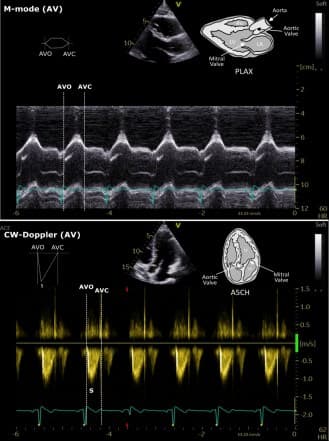
Figure 1. Echocardiographic representation of MVO/MVC and AVO/AVC.
Clinical Snapshot
Evidence Rating
Relevance
high Priority