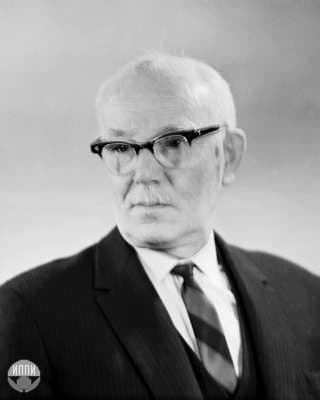
History of space medicine: Academician Vasily V. Parin, founder of space cardiology
Executive Summary
This paper reviews the pioneering contributions of Vasily V. Parin to space cardiology, focusing on the development of methods such as heart rate variability (HRV) analysis, seismocardiography, and ballistocardiography for monitoring cardiovascular adaptations to weightlessness. It highlights advancements in onboard medical equipment and the integration of mathematical models for functional state evaluation, which have influenced both space medicine and terrestrial healthcare applications.
Answer Machine Insights
Q: What role did HRV analysis play in space cardiology?
HRV analysis was pivotal in studying vegetative regulation and adaptation mechanisms during weightlessness.
The HRV analysis played the key role in studying the vegetative regulation of blood circulation in a space flight.
Q: What advancements in medical equipment were made for space missions?
Medical equipment such as the Polynom 2M enabled recording of cardiac and respiratory parameters, including seismocardiograms.
The medical control system was based on ECG, respiration and seismocardiogram recording.
Key Results
HRV analysis revealed parasympathetic dominance during initial adaptation to weightlessness, followed by sympathetic activation in later stages.
The development of contactless monitoring methods, such as ballistocardiography and seismocardiography, enabled cardiovascular assessments during space missions.
Visual Evidence
Clinical Snapshot
Evidence Rating
Relevance
high Priority