A Low-Cost System for Seismocardiography-Based Cardiac Triggering: A Practical Solution for Cardiovascular Magnetic Resonance Imaging at 3 Tesla
Executive Summary
This study presents a pilot clinical validation of a novel low-cost seismocardiography (SCG)-based system for cardiac triggering during magnetic resonance imaging (MRI) at 3 Tesla. The system was tested on 18 subjects and compared against a commercial ECG-based system, achieving high accuracy metrics (PPV > 99%, F1 > 99%, SE > 99%, ACC > 98%). The SCG system demonstrated immunity to electromagnetic and acoustic interference during MRI sequences, offering comparable or superior image quality for cardiac imaging. Clinical implications include improved patient comfort, reduced preparation time, and enhanced reliability in high-field MRI environments.
Answer Machine Insights
Q: How does the SCG system compare to ECG in terms of accuracy?
The SCG system achieved comparable or superior accuracy metrics (PPV > 99%, F1 > 99%, SE > 99%, ACC > 98%) compared to ECG.
In all 18 subjects, a mean PPV > 99 % was achieved; F1 > 99 %; SE > 99 %; ACC > 98 %; 1.96σ < 3.5 bpm.
Q: What are the advantages of the SCG system over ECG in MRI environments?
The SCG system is immune to electromagnetic and acoustic interference, requires less patient preparation, and provides reliable cardiac monitoring during MRI sequences.
The SCG system tested is completely immune to electromagnetic and acoustic interference during all the sequences tested.
Key Results
Mean PPV > 99%, F1 > 99%, SE > 99%, ACC > 98%
Image quality metrics using BRISQUE showed SCG-triggered scans were equivalent or superior to ECG-triggered scans.
Visual Evidence
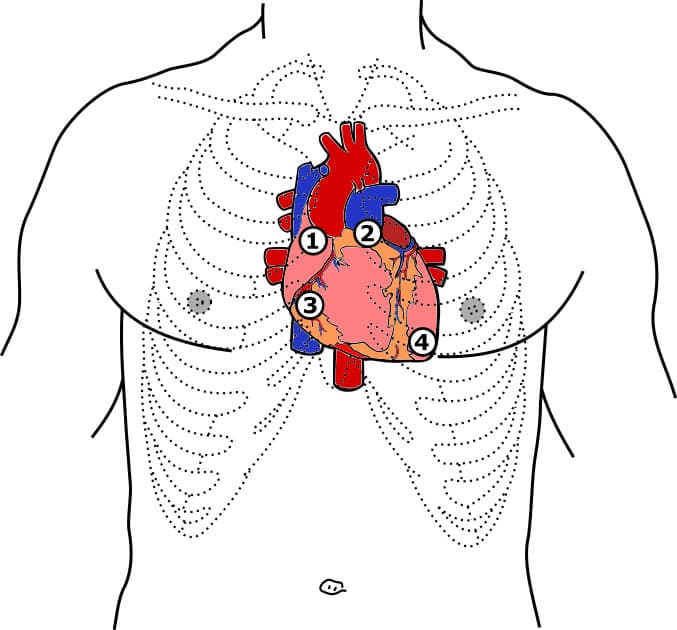
Clinical Snapshot
Evidence Rating
Relevance
high Priority