Advanced Fusion and Empirical Mode Decomposition-Based Filtering Methods for Breathing Rate Estimation from Seismocardiogram Signals
Executive Summary
This study introduces three novel methods for estimating breathing rate (BR) from seismocardiogram (SCG) signals, including amplitude modulation of S1 peaks, Empirical Mode Decomposition (EMD), and advanced fusion techniques. The EMD-based method achieved the lowest mean absolute error (MAE) of 1.5 breaths per minute, outperforming traditional intensity-based methods and demonstrating computational efficiency. The fusion approach further improved accuracy by combining respiratory signals from multiple methods, highlighting its potential for robust non-invasive BR monitoring.
Answer Machine Insights
Q: What is the best-performing method for BR estimation?
The Empirical Mode Decomposition (EMD) method achieved the lowest MAE of 1.5 breaths per minute.
The overall response of the EMDDR method on the SCG is very promising, as it outperforms all the state-of-the-art and the AM S1 method proposed in this work, achieving a low average MAE of 1.5 bpm for the DFT analysis.
Key Results
Empirical Mode Decomposition (EMD) achieved a mean absolute error (MAE) of 1.5 breaths per minute.
Fusion techniques improved accuracy by selecting the most reliable respiratory signal, with 40% of windows relying on S2 intensity.
Visual Evidence
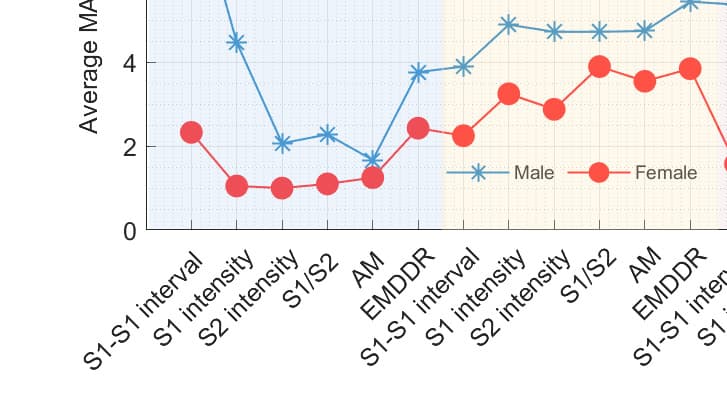
Figure 10. Comparison of MAE for male and female subjects.
Clinical Snapshot
Evidence Rating
Relevance
high Priority