Advances in Respiratory Monitoring: A Comprehensive Review of Wearable and Remote Technologies
Executive Summary
This comprehensive review explores wearable and remote technologies for respiratory monitoring, including traditional chest belts, seismocardiography (SCG), ballistocardiography (BCG), optical fibers, radar systems, and acoustic methods. It highlights innovative approaches such as fiber-optic sensing and machine learning for signal processing, and discusses clinical applications like sleep apnea detection and asthma monitoring. The study underscores the potential of these technologies to improve continuous respiratory monitoring in diverse environments, with implications for telemedicine and personalized healthcare.
Answer Machine Insights
Q: What are the advantages of seismocardiography for respiratory monitoring?
Seismocardiography captures chest micro-vibrations, enabling simultaneous monitoring of respiratory and cardiac signals.
The SCG signal continuously reflects the activity of both the cardiovascular and respiration systems. SCG components are presented in all three axes of the accelerometer, with each axis revealing a distinct pattern.
Q: How do fiber-optic sensors contribute to respiratory monitoring?
Fiber-optic sensors are highly sensitive, non-invasive, and resistant to electromagnetic interference, making them suitable for integration into wearable textiles and MRI-compatible devices.
Optical fiber-based sensors are also commonly embedded in these items. With the advent of modern bioamplifiers, deriving respiratory parameters from chest impedance variations has become also convenient.
Key Results
Respiratory rate monitoring using wearable devices achieves up to 95% accuracy in detecting breathing patterns.
Fiber-optic sensors integrated into textiles provide reliable respiratory monitoring even in MRI environments.
Visual Evidence
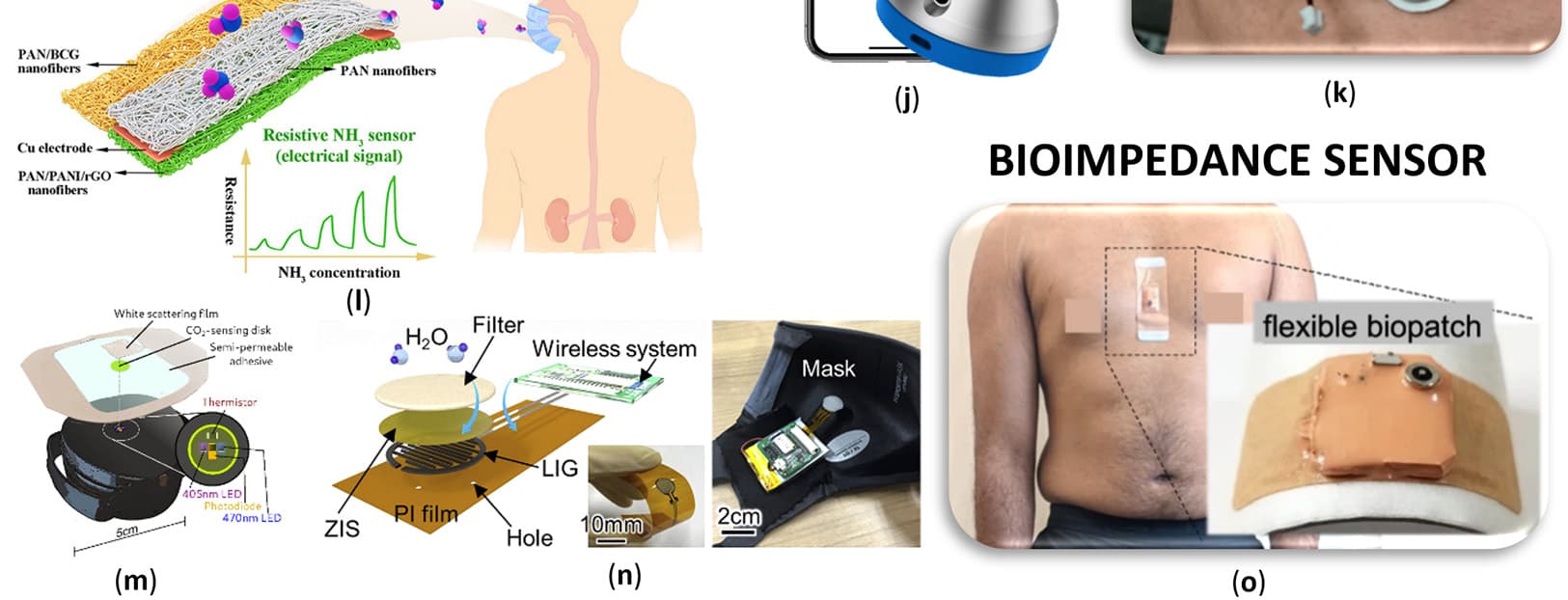
Figure 2. Wearable and remote respiratory sensors: (a) Resmetrix—chest strap powered by a proprietary sensor for monitoring breathing patterns, heart rate, temperature, activity, and position.
Clinical Snapshot
Evidence Rating
Relevance
high Priority