Comparison of multiple cardiac signal acquisition technologies for heart rate variability analysis
Executive Summary
This study evaluated the feasibility of using multiple cardiac signal acquisition technologies, including ECG, SCG, PCG, PPG, and PiPG, for heart rate variability (HRV) analysis. A custom multichannel device was developed to simultaneously monitor these signals in 20 healthy volunteers during postural changes. The findings indicate that PiPG demonstrated the best agreement with ECG for most HRV indices, while SCG and PCG showed limitations, particularly for high-frequency spectral components. The study highlights the potential of PiPG for HRV analysis in clinical and homecare applications.
Answer Machine Insights
Q: Which sensor showed the best agreement with ECG for HRV analysis?
PiPG demonstrated the best agreement with ECG for most HRV indices.
We also demonstrated that PiPG showed better agreement with ECG than other sensors for most HRV indexes.
Q: What were the limitations of SCG and PCG in HRV analysis?
SCG and PCG showed difficulties in detecting heartbeats and limited agreement for high-frequency spectral components.
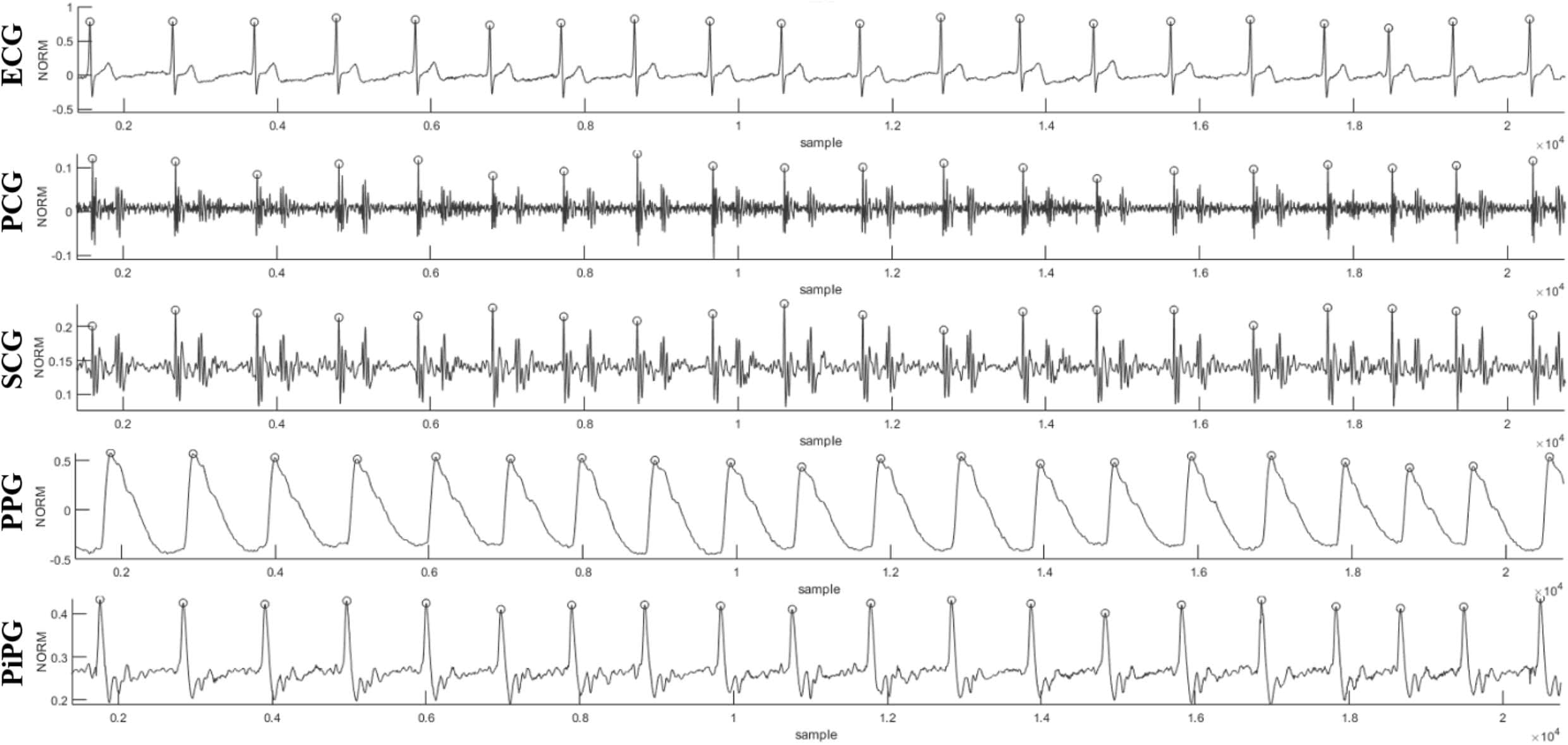
We found that it was more difficult to detect heart beats with SCG and PCG than with the other sensors. Regarding HRV analysis, NN series issued from PCG led to HRV measurements that demonstrated only low correlation and agreement with HRV measurements obtained from ECG.
Key Results
PiPG showed better agreement with ECG than other sensors for most HRV indices, including SDNN and ANI.
SCG and PCG demonstrated limitations, particularly in detecting high-frequency spectral components of HRV.
Visual Evidence
Clinical Snapshot
Evidence Rating
Relevance
high Priority