Contactless Mapping of Thoracic and Abdominal Movements: Applications for Seismocardiography
Executive Summary
This study introduces ICARE, a contactless ultrasonic imaging system designed to measure thoracic and abdominal motion for seismocardiography (SCG). ICARE demonstrated the ability to acquire SCG fiducial timings comparable to accelerometer-based methods, with timing differences of -2.1±7.3 ms, 3.9±7.3 ms, and -6.5±5.5 ms for key fiducial points. The system also revealed novel insights into thoracic and abdominal wave propagation, suggesting potential applications in clinical and non-clinical environments.
Answer Machine Insights
Q: How does ICARE compare to accelerometer-based SCG measurements?
ICARE demonstrated comparable timing accuracy for SCG fiducial points, with differences ranging from -6.5 ms to 3.9 ms.
The difference in timing of the first three SCG fiducial points was -2.1±7.3 ms ('MC'), 3.9±7.3 ms ('IM'), and -6.5±5.5 ms ('AO').
Q: What novel observations were made using ICARE?
ICARE revealed a downward-propagating wave in the abdomen with a mean velocity of 2.6 m/s, potentially caused by heart-diaphragm interactions.
The mean velocity for the 3 participants is 2.6 m/s. This wave could potentially be caused by the heart pulling and pushing on the diaphragm, which then propagates in the general viscera.
Key Results
Timing differences for SCG fiducial points were -2.1±7.3 ms, 3.9±7.3 ms, and -6.5±5.5 ms compared to accelerometer measurements.
Mean velocity of downward-propagating abdominal wave was 2.6 m/s, distinct from the pulse wave velocity of ~10 m/s.
Visual Evidence
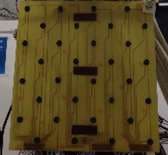
Figure 1. Left: description of the experiment. Accelerometer is placed on the sternum above the xiphoid and ICARE and accelerometer measurements are performed concurrently. Distance between the object and receivers is 72 cm. Right: emission and receivers arrays. Central panel combines both the radiating and receiving elements.
Clinical Snapshot
Evidence Rating
Relevance
high Priority