Detecting Preload Changes Using Seismocardiography
Executive Summary
This study investigates the ability of seismocardiography (SCG) to detect preload changes induced by intravenous saline infusion in 26 subjects, including individuals with cardiac disease and healthy controls. Using a duration-dependent hidden Markov model for signal processing and fiducial point detection, significant changes in SCG amplitudes and time intervals were observed post-infusion, indicating SCG's sensitivity to preload alterations. These findings suggest SCG's potential for clinical applications in monitoring conditions like decompensated heart failure.
Answer Machine Insights
Q: Can SCG detect preload changes induced by saline infusion?
Yes, SCG detected significant changes in amplitudes and time intervals post-infusion, indicating sensitivity to preload alterations.
The results found in this study demonstrate a significant difference in the SCG measures after preload augmentation, thus indicating that the SCG could potentially be utilized to detect preload changes.
Key Results
Post-infusion, diastolic SCG amplitudes Dd increased by 27% (p=0.016) and Ed increased by 48% (p<0.000).
Systolic SCG amplitude Ls increased by 19% (p=0.015), while diastolic time intervals Bd to Fd decreased by 10% (p=0.010).
Visual Evidence
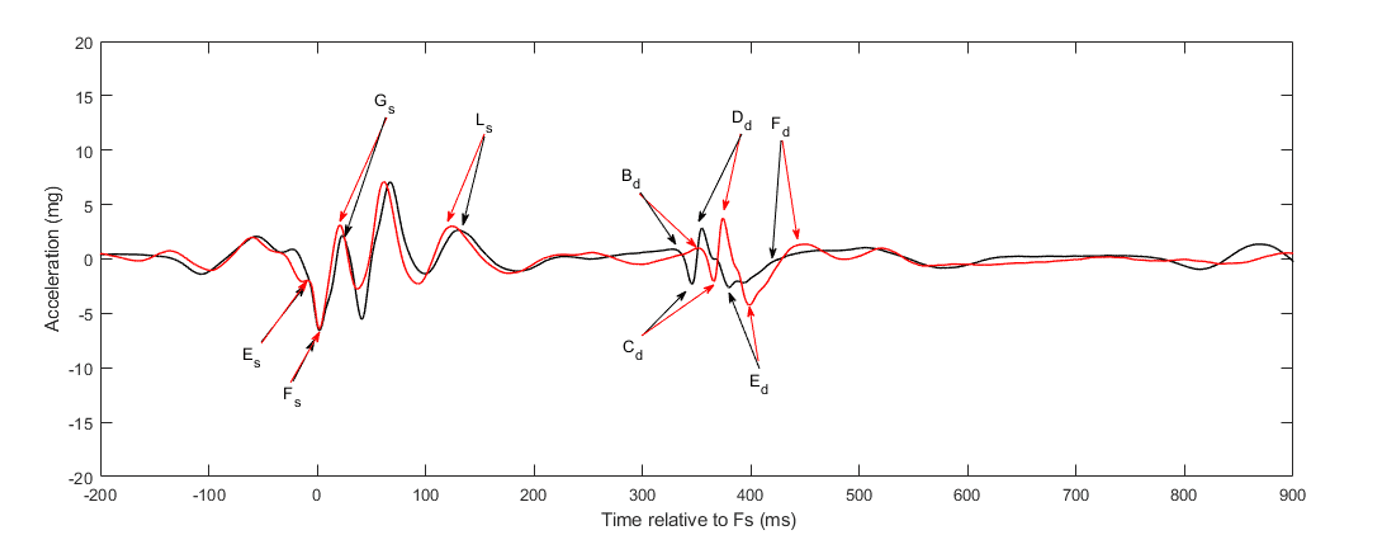
Table 1: Data from seismocardiography before (pre) and after (post) fluid infusion. **P < 0.01 and *P < 0.05. Data represents median and IQR. Differences are pre-post. g gravity and ms millisecond
Clinical Snapshot
Evidence Rating
Relevance
high Priority