Quantifying preload alterations using a sensitive chest-mounted accelerometer
Executive Summary
This study investigates the impact of preload alterations on seismocardiography (SCG) time intervals using a chest-mounted accelerometer. Acute saline infusion in 24 subjects demonstrated significant changes in isovolumetric relaxation time (IVRT) and ejection time (ET), highlighting SCG's potential for quantifying cardiac dynamics. The methodology included high-resolution SCG signal acquisition and fiducial point identification using a segmentation algorithm.
Answer Machine Insights
Q: What changes in SCG time intervals were observed after saline infusion?
Saline infusion shortened the isovolumetric relaxation time (IVRT) and prolonged the ejection time (ET).
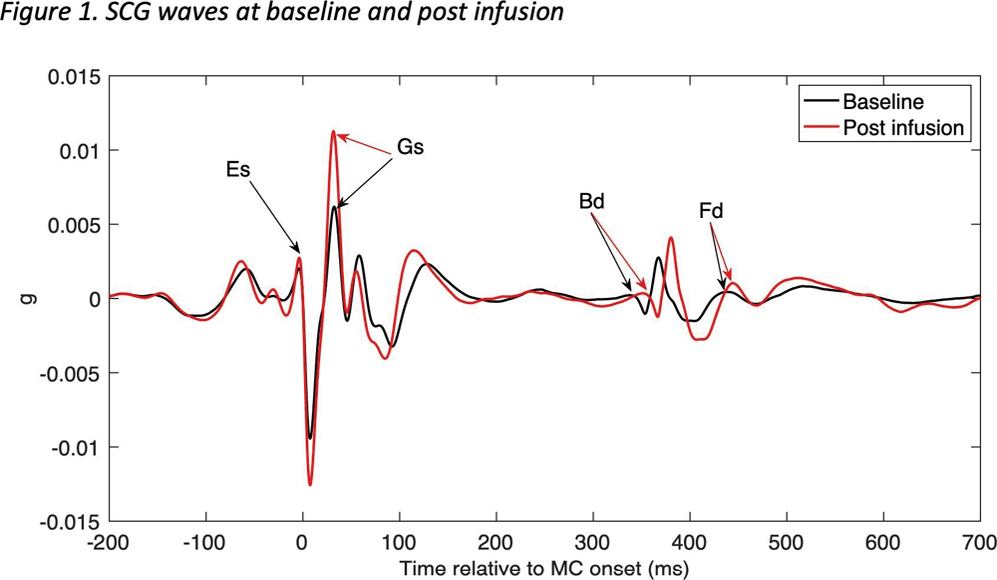
In the whole group, acute saline infusion shortened the IVRT (Bd-Fd) from 91.0±15.3 ms to 82.7±15.3 ms (p=0.004) and prolonged the ET (Gs-Bd) from 329.4±35 ms to 343.4±33 ms (p<0.001).
Q: Was there a difference in SCG response between subjects with and without cardiac disease?
No significant difference in response was observed between subjects with or without cardiac disease.
There was no significant difference in response between subjects with or without cardiac disease.
Key Results
Acute saline infusion shortened IVRT from 91.0±15.3 ms to 82.7±15.3 ms (p=0.004).
Acute saline infusion prolonged ET from 329.4±35 ms to 343.4±33 ms (p<0.001).
Visual Evidence
Clinical Snapshot
Evidence Rating
Relevance
high Priority