Recent Advances in Seismocardiography
Executive Summary
This review paper explores recent advancements in seismocardiography (SCG), a noninvasive method for assessing cardiac-induced mechanical vibrations. It highlights innovations in lightweight sensors, signal processing techniques, and machine learning applications that enhance SCG's clinical utility for monitoring cardiovascular conditions. The paper emphasizes SCG's potential in estimating cardiac time intervals, detecting heart rate variability, and diagnosing conditions such as atrial fibrillation and heart failure, while addressing challenges like signal variability and standardization of fiducial points.
Answer Machine Insights
Q: What are the main clinical applications of SCG discussed in the paper?
SCG is used for monitoring cardiac time intervals, detecting heart rate variability, and diagnosing conditions like atrial fibrillation, heart failure, and coronary artery disease.
Recent studies suggest possible SCG utility for monitoring left-ventricle function, coronary blood flow during balloon angioplasty, heart and breathing rates, and ventricular filling.
Q: What are the challenges in SCG signal analysis?
Challenges include variability in SCG morphology due to factors like respiration, sensor placement, and posture, as well as the lack of standardized fiducial point labeling.
SCG morphology is affected by different factors such as respiration, sensor location, subject posture, the amount of chest surface soft tissue, and different heart diseases.
Key Results
SCG signals can estimate cardiac time intervals such as pre-ejection period (PEP) and left ventricular ejection time (LVET) with high accuracy.
Machine learning algorithms achieved up to 98.7% accuracy in detecting atrial fibrillation using SCG signals.
Visual Evidence
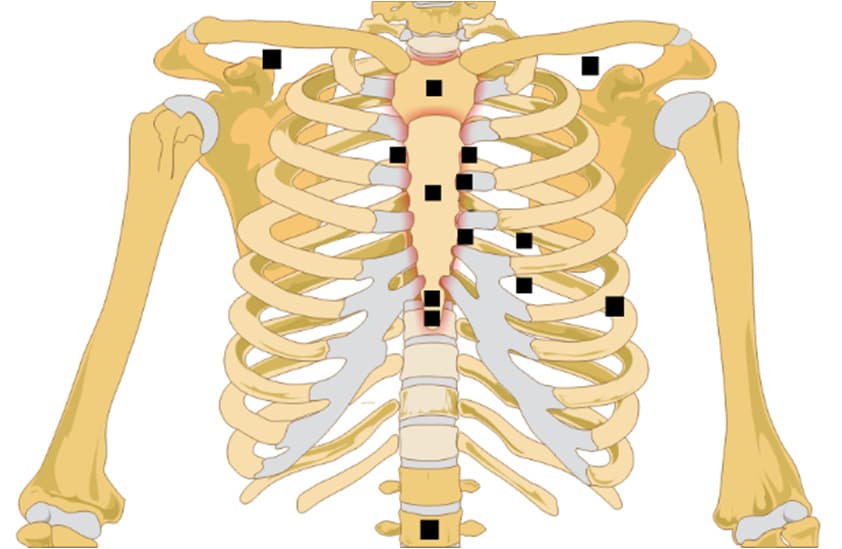
Figure 2. Sensor location distribution in recent SCG studies.
Clinical Snapshot
Evidence Rating
Relevance
high Priority