Wearable ballistocardiogram and seismocardiogram systems for health and performance
Executive Summary
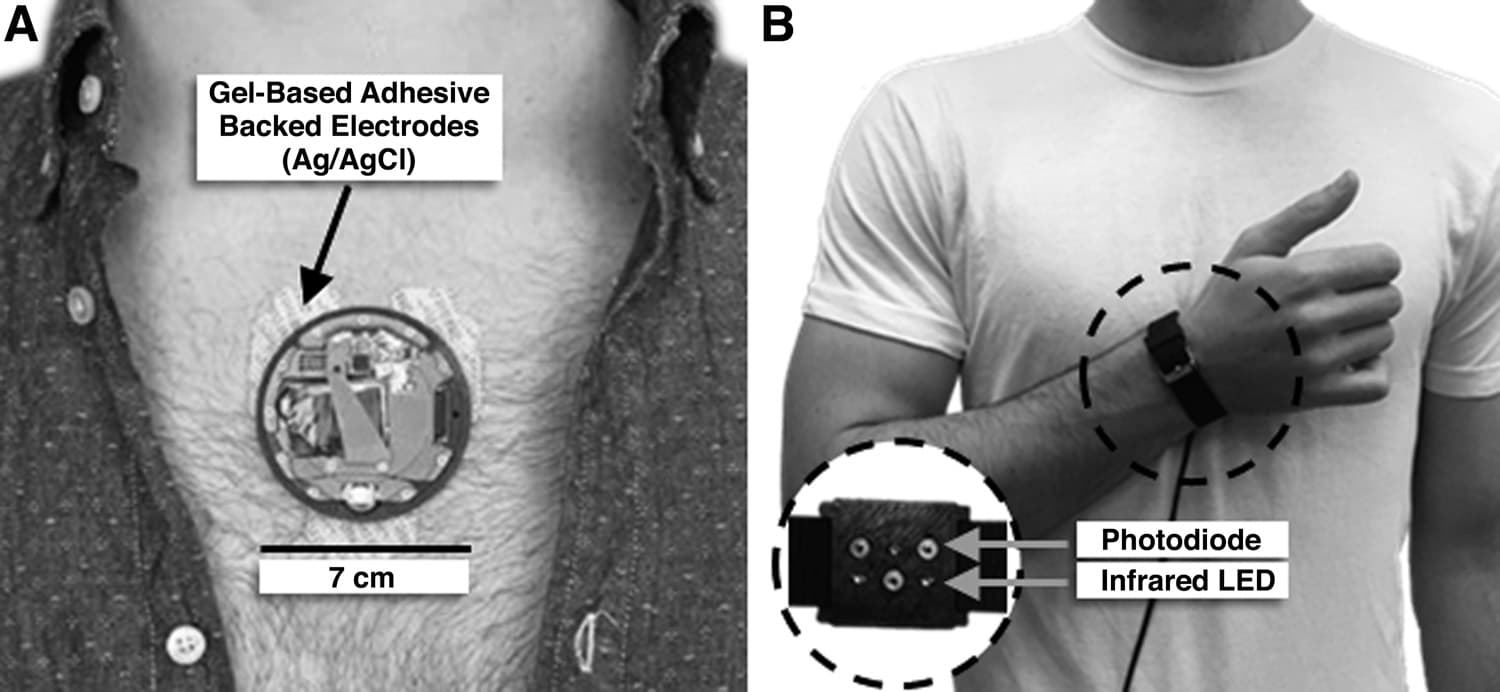
This review explores the development and validation of wearable ballistocardiogram (BCG) and seismocardiogram (SCG) systems for monitoring mechanical aspects of cardiovascular function. Using miniature accelerometers and advanced signal processing techniques such as empirical mode decomposition and machine learning-based domain adaptation, the study demonstrates robust extraction of parameters like cardiac output, blood pressure, and contractility. Validation studies in healthy subjects and heart failure patients highlight the potential for these systems to enable continuous, non-invasive monitoring outside clinical settings, with applications ranging from heart failure management to performance optimization in austere environments.
Answer Machine Insights
Q: How does wearable BCG compare to traditional methods for cardiac output estimation?
Wearable BCG demonstrated strong correlation with Doppler echocardiogram-derived cardiac output changes during exercise recovery.
Changes in BCG root mean square (RMS) power were strongly correlated to changes in cardiac output (CO) measured by Doppler ultrasound during exercise recovery.
Q: What techniques were used to reduce motion artifacts in SCG signals?
Empirical mode decomposition (EMD) was used to separate motion-related components from heartbeat-related components in SCG signals.
Through EMD, the components of the SCG signal that were related to movement were sifted from the components related to heartbeats.
Key Results
BCG-derived root mean square (RMS) power strongly correlated with cardiac output changes during exercise recovery (r2 = 0.85).
Wearable SCG-based preejection period (PEP) estimation achieved limits of agreement within 8.1% to 12.5% during walking.
Visual Evidence
Clinical Snapshot
Evidence Rating
Relevance
high Priority