Correlation between diastolic seismocardiography variables and echocardiography variables
Executive Summary
This study investigates the correlation between diastolic seismocardiography (SCG) variables and echocardiographic measures, focusing on the early diastolic mitral annular velocity (e′). Using a duration-dependent hidden Markov model for SCG signal segmentation and fiducial point detection, the study found a significant correlation (r = 0.713, P < 0.001) between SCG amplitudes and e′ in supine position. The findings suggest SCG's potential utility in evaluating diastolic function, particularly for preload-independent measures of myocardial compliance.
Answer Machine Insights
Q: What is the primary finding regarding SCG and echocardiographic correlation?
SCG amplitudes showed a high correlation (r = 0.713, P < 0.001) with the echocardiographic variable e′ in supine position.
The peak-to-peak amplitude of the diastolic SCG complex and e′ had a high correlation of 0.713 (P < 0.001).
Q: Which SCG fiducial point was most sensitive to preload changes?
The Ed fiducial point was significantly altered by preload changes induced by tilting.
Only the Ed fiducial point was significantly altered by a 30° head-up tilt from supine position.
Key Results
Correlation coefficient of 0.713 (P < 0.001) between SCG amplitudes and echocardiographic e′ in supine position.
Ed fiducial point was significantly altered by preload changes induced by a 30° head-up tilt (P = 0.000).
Visual Evidence
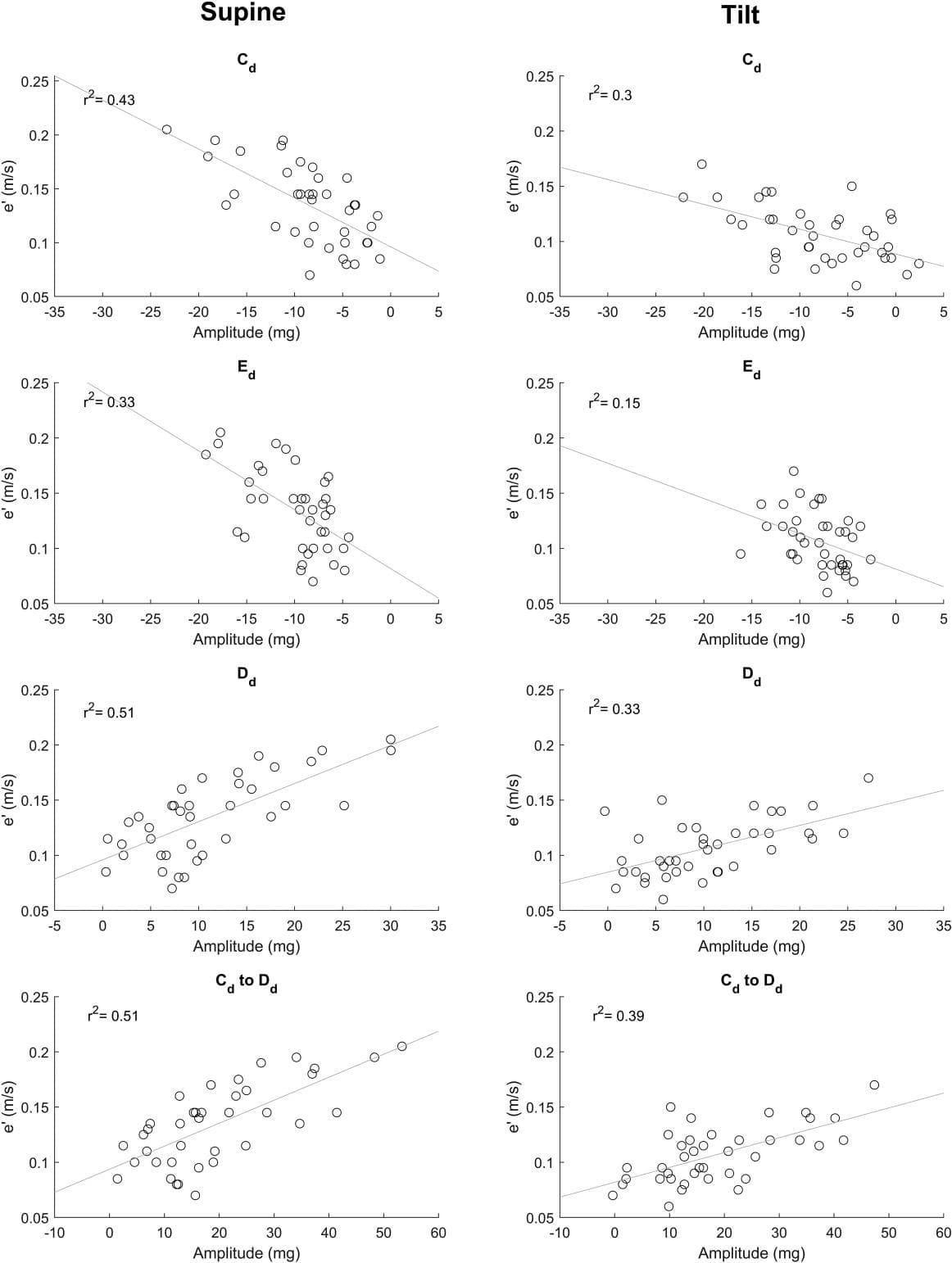
Figure 2 Correlation plots for e′ and the amplitudes from seismocardiography in tilted and supine position. mg, milligravity.
Clinical Snapshot
Evidence Rating
Relevance
high Priority