Deep learning-based beat-to-beat delineation of heart sounds and fiducial points in seismocardiography
Executive Summary
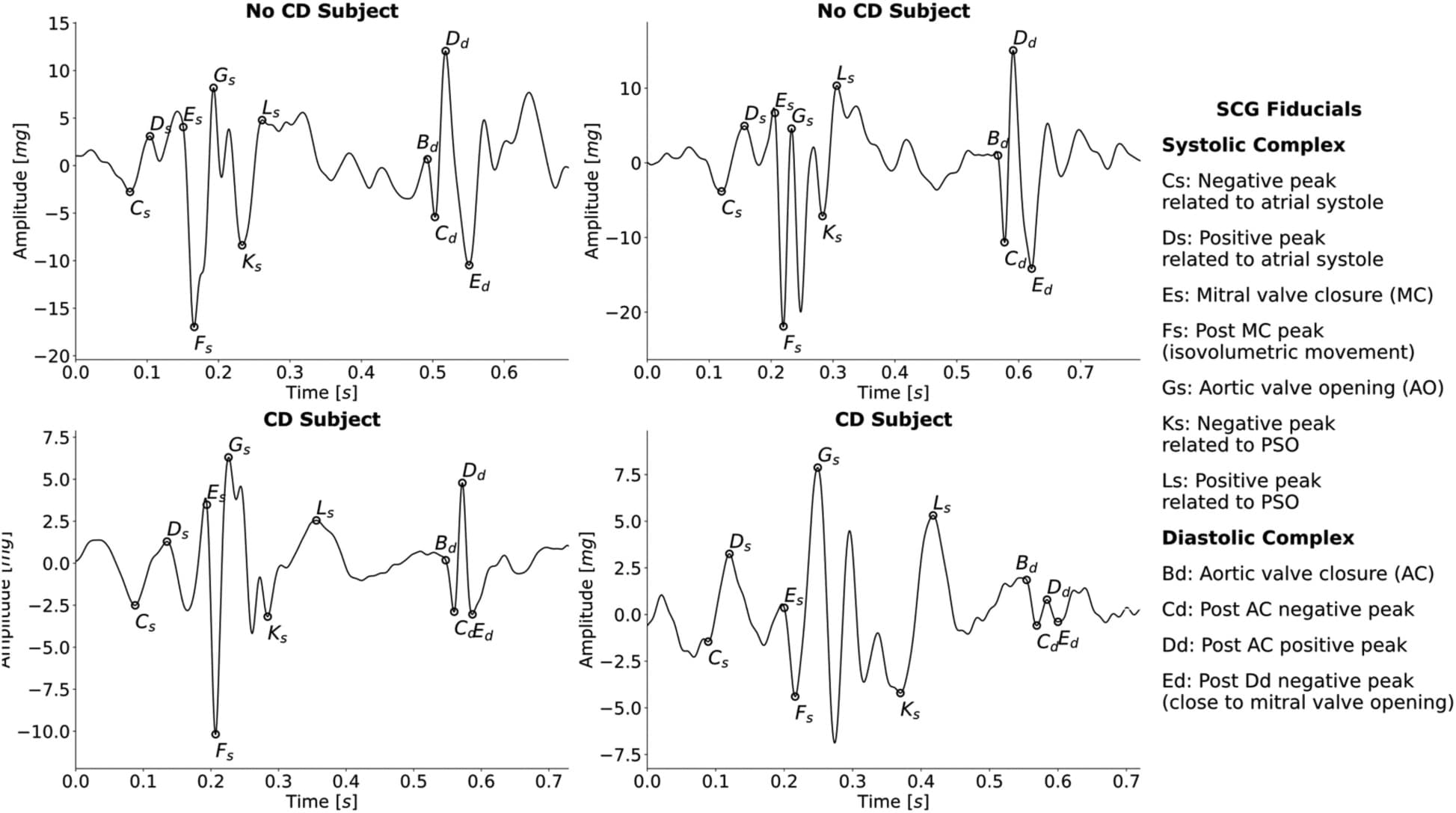
This study presents a deep learning-based algorithm, SeismoTracker, utilizing a U-Net architecture for automatic beat-to-beat detection of 11 fiducial points in seismocardiography (SCG). The algorithm was trained and validated on a dataset of 42,452 beats from 198 subjects, achieving median positive predictive values (PPV) between 0.809 and 1.000 and sensitivities between 0.843 and 0.918 across fiducial points. Clinical implications include potential applications in continuous monitoring of myocardial mechanics and hemodynamic status, with relevance to cardiac dysfunction and heart failure assessment.
Answer Machine Insights
Q: What is the primary innovation of the SeismoTracker algorithm?
The SeismoTracker algorithm uses a U-Net architecture to detect 11 fiducial points in SCG signals on a beat-to-beat basis, enabling comprehensive cardiac monitoring.
An algorithm for the automatic detection of 11 fiducial points in SCG using a U-Net and simple postprocessing methods was developed and tested in subjects with and without CD, with excellent performance.
Q: How does the algorithm perform in subjects with cardiac disease (CD)?
The algorithm achieved high PPV and sensitivity in subjects with CD, though performance was slightly lower compared to subjects without CD due to morphological variability.
There was a significant difference in the PPV and sensitivity for fiducial point detection between the two groups, indicating that the model was more efficient in the subjects with no known CD compared to the subjects with known CD.
Key Results
Median positive predictive value ranged between 0.809 and 1.000 across fiducial points.
Median sensitivity ranged between 0.843 and 0.918 across fiducial points.
Visual Evidence
Clinical Snapshot
Evidence Rating
Relevance
high Priority