Seismocardiography and echocardiography: the correlation in the systolic complex
Executive Summary
This study investigates the correlation between seismocardiographic (SCG) and echocardiographic (echo) systolic variables, focusing on preload sensitivity. Using a sample of 34 healthy subjects, SCG signals were segmented into individual heartbeats, and systolic fiducial points were defined using a detection algorithm. Statistical analysis revealed moderate correlations between SCG and echo variables such as LVET, IVCT, and S’, and demonstrated SCG's ability to detect preload changes. These findings suggest SCG's potential as a non-invasive tool for assessing systolic mechanical heart function.
Answer Machine Insights
Q: Can SCG detect changes in preload?
Yes, SCG variables demonstrated sensitivity to preload changes, including significant alterations in systolic time intervals and amplitudes.
SCG is able to detect a change in systolic variables when preload is decreased. Several moderate correlations are detected between systolic echo variables and selected systolic SCG variables.
Q: Which echo variables correlated with SCG variables?
Echo variables such as LVET, IVCT, and S’ showed moderate correlations with SCG time intervals and amplitudes.
LVET shows a correlation with several SCG time intervals... Regarding IVCT, a significant correlation with the time interval Es-Fs in the early systole was demonstrated.
Key Results
SCG variables showed moderate correlations with echo variables such as LVET (r > 0.3).
SCG detected preload changes in systolic variables, including significant alterations in time intervals and amplitudes.
Visual Evidence
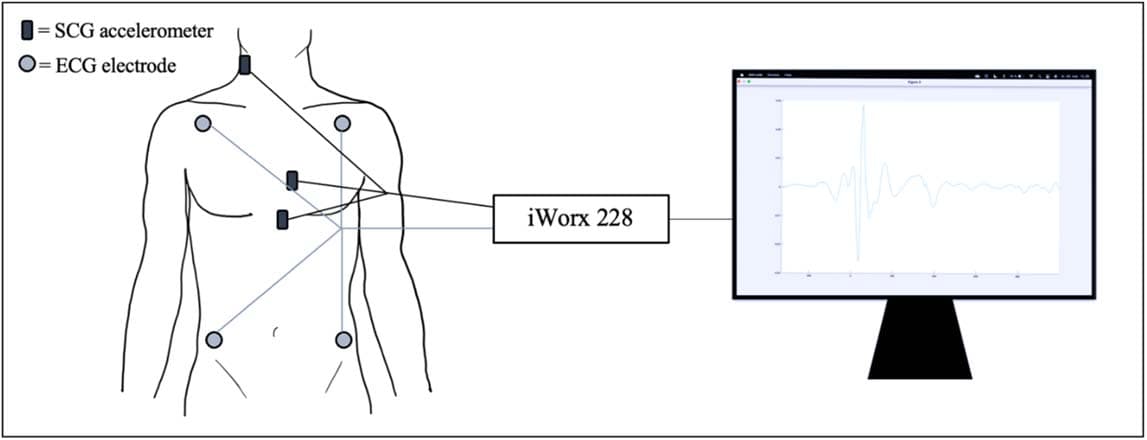
Figure 2. Illustration of the experimental setup including the placement of the SCG accelerometers and the ECG electrodes.
Clinical Snapshot
Evidence Rating
Relevance
high Priority