Design of synchronous seismocardiography-ballistocardiography monitoring system
Executive Summary
This study presents a wearable system for synchronous acquisition of seismocardiography (SCG) and ballistocardiography (BCG) signals using a MEMS triaxial accelerometer and PVDF piezoelectric sensor array. Experimental validation with seven participants demonstrated high signal-to-noise ratios (>20 dB at rest, >10 dB during exercise) and positional flexibility, making the system suitable for clinical and home-based monitoring applications.
Answer Machine Insights
Q: What is the signal-to-noise ratio achieved by the system?
The signal-to-noise ratio is greater than 20 dB during rest and greater than 10 dB during exercise.
In the rest state, the signal-to-noise ratio of each signal is greater than 20 dB, and in the dynamic situation, the signal-to-noise ratio is greater than 10 dB.
Q: Does the system require strict sensor placement?
No, the system does not have strict requirements for sensor placement.
This paper found that the relative time intervals of the cardiac shock signal and the cardiac shock signal are basically unchanged, which proves that the placement of the equipment developed in this paper is not strictly restricted.
Key Results
Signal-to-noise ratio >20 dB during rest and >10 dB during exercise.
System demonstrated positional flexibility with consistent signal quality across varied sensor placements.
Visual Evidence
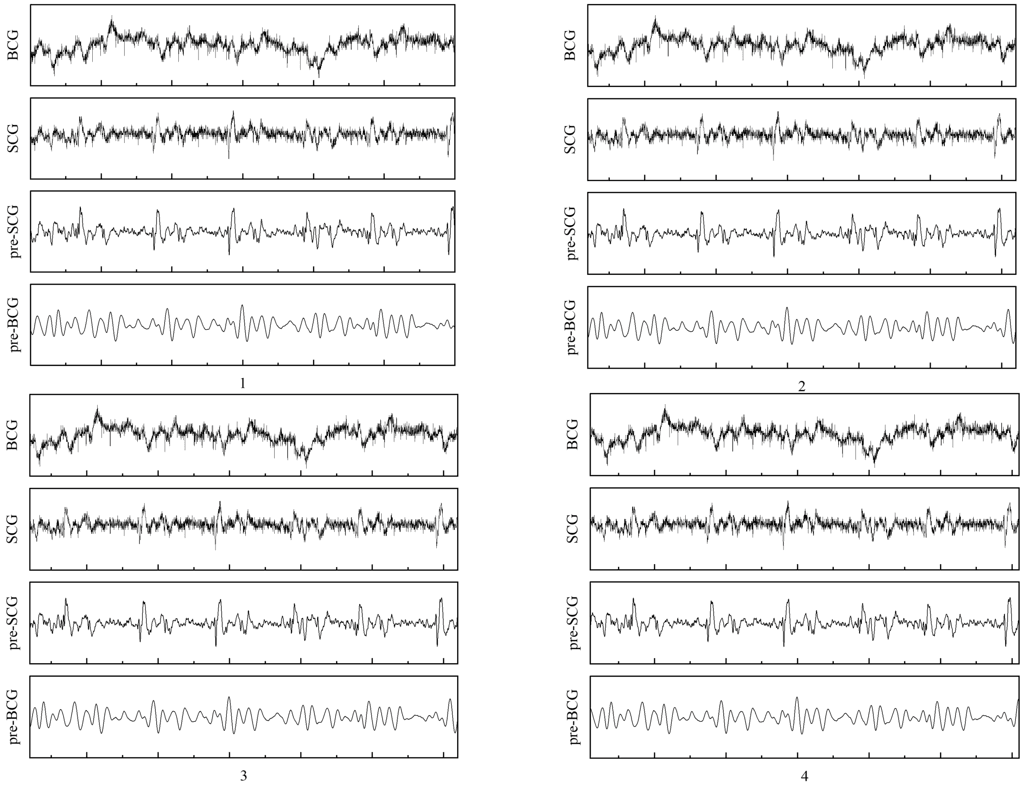
Figure 5. placement test results.
Clinical Snapshot
Evidence Rating
Relevance
high Priority