Identifying Patients With Coronary Artery Disease Using Rest and Exercise Seismocardiography
Executive Summary
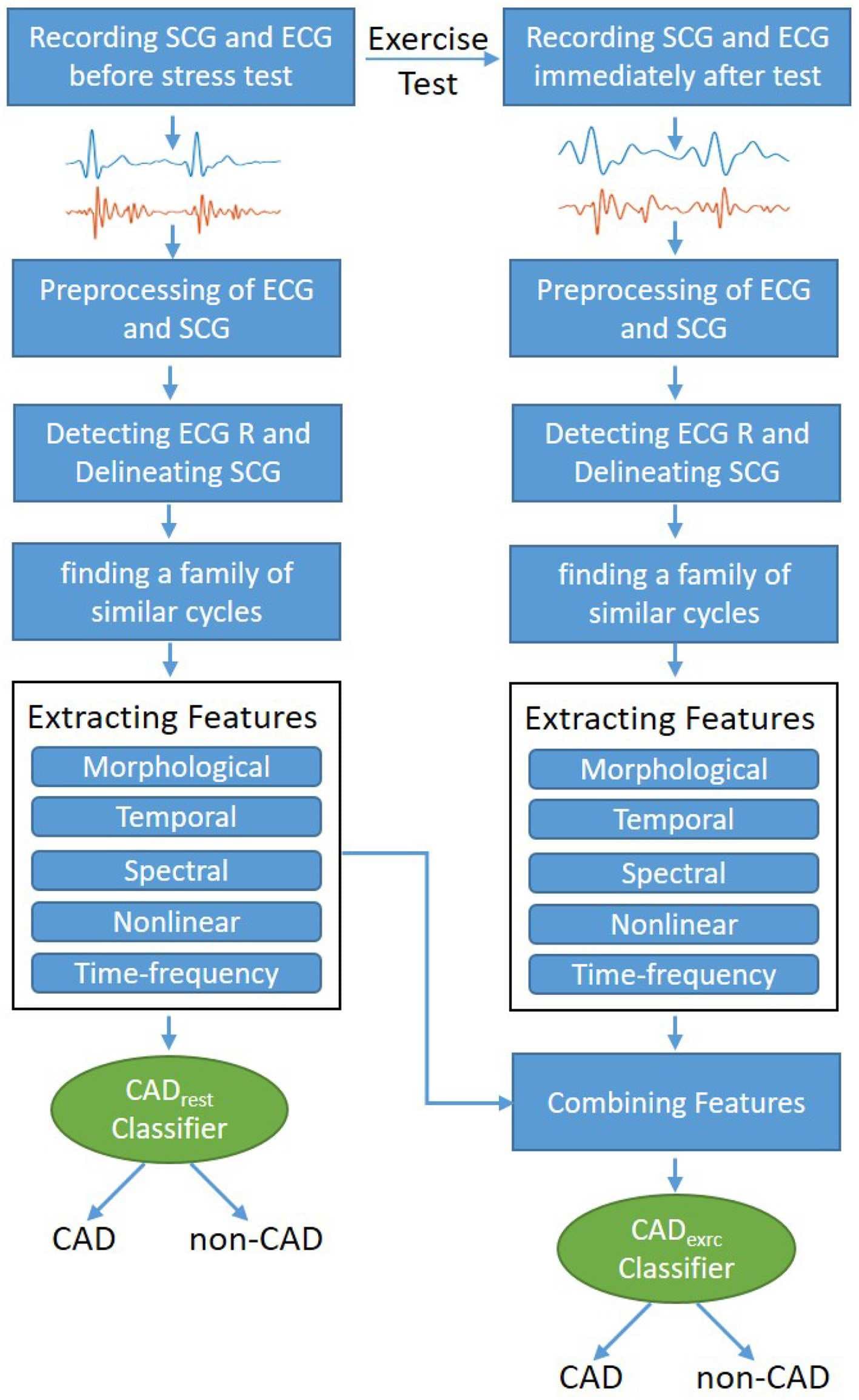
This study introduces a non-invasive methodology using seismocardiography (SCG) to identify patients with coronary artery disease (CAD) based on rest and exercise SCG signals. Two logistic regression models were developed and validated against angiography results, achieving accuracies of 74% (rest) and 82% (exercise). The exercise SCG model demonstrated superior sensitivity (84%) and specificity (80%) compared to stress ECG, and performed comparably to stress echocardiography and coronary computed tomography angiography (CCTA). The findings suggest SCG as a fast, inexpensive, and potentially layperson-operable tool for CAD detection.
Answer Machine Insights
Q: How does SCG compare to stress ECG in detecting CAD?
SCG outperformed stress ECG in sensitivity (84% vs. 70%) and specificity (80% vs. 55%).
The sensitivity and specificity of the rest SCG were 75 and 72%, respectively, which were higher compared to those calculated for the exercise ECG (70 and 55%, respectively, for sensitivity and specificity).
Q: Can SCG be used outside clinical settings?
Yes, rest SCG can potentially be recorded by laypersons, and moderate exercise SCG may be feasible for at-home screening.
SCG examination is fast, inexpensive, and may even be carried out by laypersons.
Key Results
Exercise SCG model achieved 82% accuracy, 84% sensitivity, and 80% specificity.
Bootstrap-corrected AUC for exercise SCG was 0.88, significantly higher than rest SCG (AUC = 0.77).
Visual Evidence
Research Tags
Clinical Snapshot
Evidence Rating
Relevance
high Priority