Detecting Coronary Artery Disease Using Rest Seismocardiography and Gyrocardiography
Executive Summary
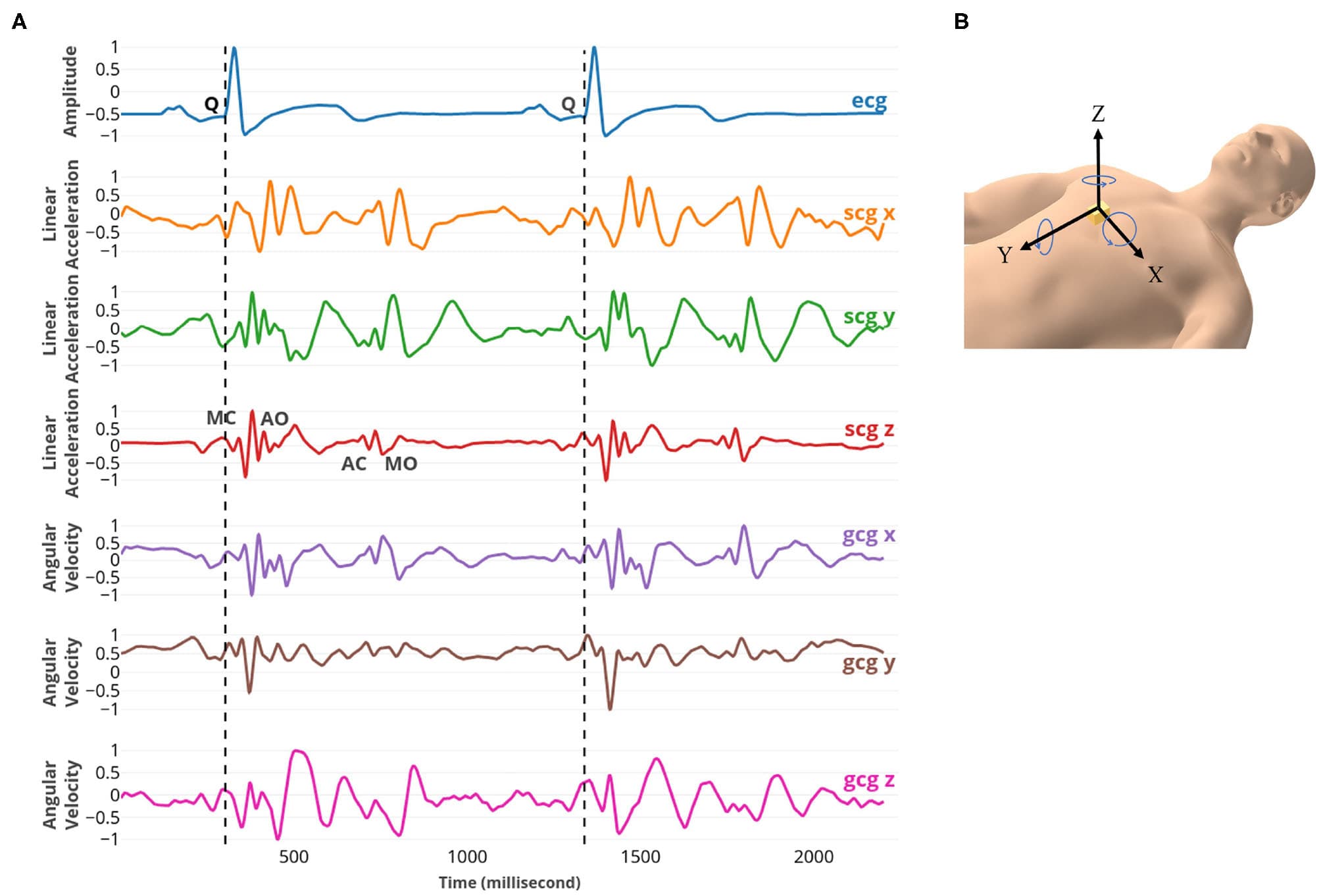
This study introduces a non-invasive method for detecting coronary artery disease (CAD) using seismocardiography (SCG) and gyrocardiography (GCG) signals recorded from a 3-axial accelerometer/gyroscope sensor mounted on the sternum. A dataset of 310 individuals was analyzed using a one-dimensional convolutional neural network (1D CNN) to classify CAD risk, validated against angiography. The SCG models outperformed GCG models, achieving an area under the curve (AUC) of up to 91% and sensitivity of 92–94%, suggesting that SCG/GCG recordings during rest could serve as a portable at-home CAD screening tool.
Answer Machine Insights
Q: What was the best-performing model in the study?
The SCG models, particularly those based on the y and z axes, achieved the highest AUC of 91% and sensitivity of 92–94%.
The SCG z and SCG y classifiers showed better performance relative to the other models (p < 0.05) with the area under the curve (AUC) of 91%.
Q: How does the proposed method compare to traditional stress ECG?
The SCG/GCG models achieved better sensitivity (92–98%) compared to stress ECG (70%) and comparable specificity.
The performance of the proposed 3-axial SCG/GCG solution based on recordings obtained during rest was comparable, or better than stress ECG.
Key Results
SCG models achieved an AUC of up to 91% and sensitivity of 92–94%.
The combined SCG and GCG model did not outperform individual SCG models.
Visual Evidence
Research Tags
Clinical Snapshot
Evidence Rating
Relevance
high Priority