Severe aortic stenosis detection using seismocardiography
Executive Summary
This study developed and validated a seismocardiography (SCG)-based algorithm for detecting severe aortic stenosis (AS) using a single-lead ECG and three-axis SCG signals. The algorithm achieved high sensitivity (92%), specificity (87.8%), and area under the curve (96%) in a blinded, age- and sex-matched cohort of 99 subjects. The findings suggest that SCG-based diagnostics could serve as a low-cost, non-invasive screening tool for AS, with potential applications in primary care settings.
Answer Machine Insights
Q: What was the diagnostic accuracy of the SCG-based algorithm?
The algorithm achieved a sensitivity of 92%, specificity of 87.8%, and an area under the curve of 96%.
The sensitivity, specificity and area under the curve of the model were 92% (95% CI 84.5% to 99.5%), 87.8% (95% CI 78.6% to 96.9%), and 96% (95% CI 91.9% to 99.9%), respectively.
Q: What are the potential clinical applications of this technology?
The technology could be used for population-wide screening or detecting appropriate patients for echocardiography referral in asymptomatic subjects presenting with a systolic murmur.
Potential clinical applications for this SCG-based technology include: (1) detecting appropriate patients for echocardiography referral in asymptomatic subjects presenting with a systolic murmur and (2) population-wide screening to detect AS.
Key Results
Sensitivity: 92% (95% CI 84.5% to 99.5%)
Specificity: 87.8% (95% CI 78.6% to 96.9%)
Visual Evidence
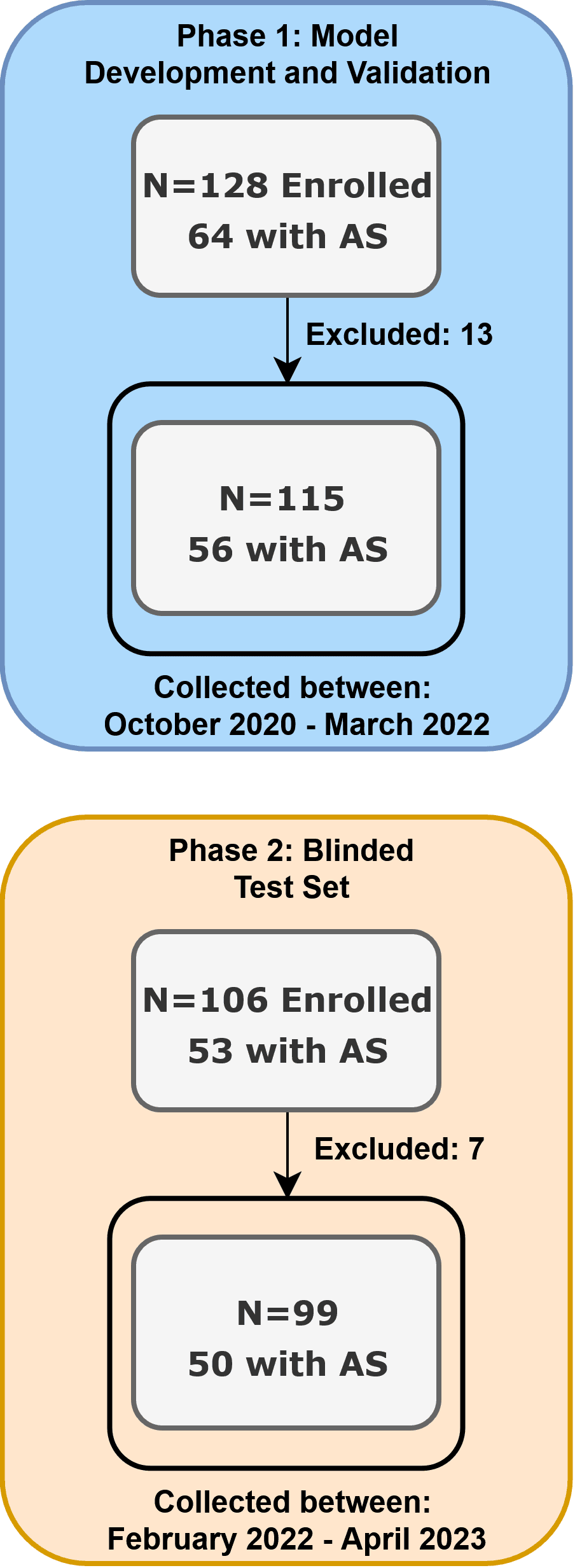
Figure 1 Flow chart outlining data collection of phase 1 and phase 2. AS, aortic stenosis.
Clinical Snapshot
Evidence Rating
Relevance
high Priority