Can Seismocardiogram Fiducial Points Be Used for the Routine Estimation of Cardiac Time Intervals in Cardiac Patients?
Executive Summary
This study investigates the feasibility of using seismocardiogram (SCG) fiducial points for routine estimation of cardiac time intervals (CTIs) in cardiac patients. The methodology involved analyzing SCG waveforms from 90 patients with myocardial infarction, heart failure, or heart transplants, and comparing fiducial points with valve movements measured via ultrasound. Results showed that only 62% of patients had traditional SCG waveforms suitable for CTI estimation, with significant variability in accuracy compared to healthy subjects, particularly for mitral valve closure. The study recommends preliminary SCG-US validation before clinical application.
Answer Machine Insights
Q: What proportion of cardiac patients had SCG waveforms suitable for CTI estimation?
62% of patients had traditional SCG waveforms suitable for CTI estimation.
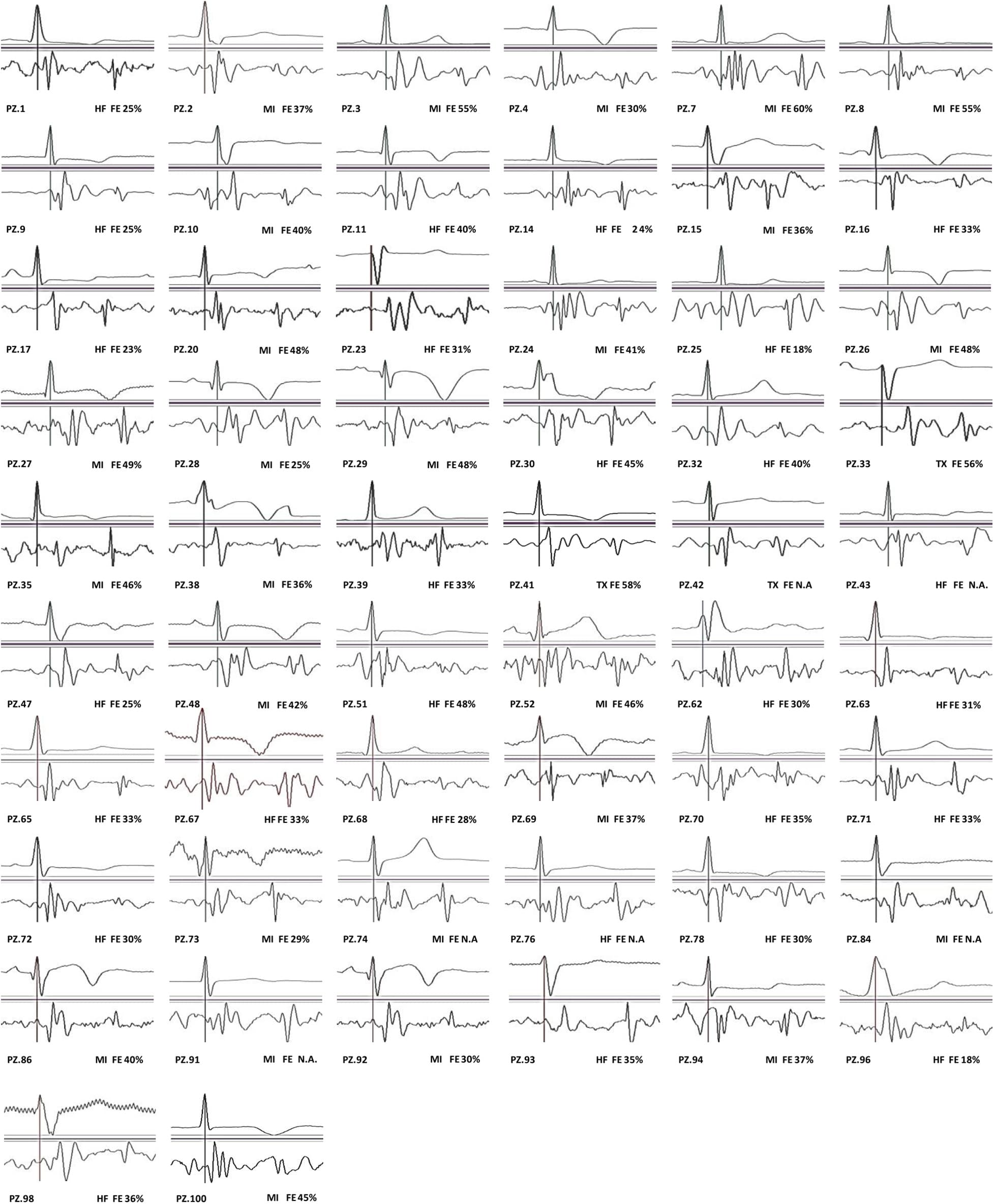
The T shape was present in 62% of the patients, with a higher prevalence in MI (79%).
Q: How accurate are SCG fiducial points compared to ultrasound measurements in cardiac patients?
SCG fiducial points showed significant variability in accuracy, with an average error of -17 ms for mitral valve closure compared to ultrasound measurements.
When compared with reference values in healthy subjects available in the literature, we observed that the Echo vs. FP differences are significantly more dispersed in the patients than in the healthy population with higher differences for the estimation of the mitral valve closure (-17 vs. 4 ms on average).
Key Results
62% of patients had traditional SCG waveforms suitable for CTI estimation.
Echo vs. SCG fiducial point differences were significantly more dispersed in patients compared to healthy subjects, with an average error of -17 ms for mitral valve closure.
Visual Evidence
Clinical Snapshot
Evidence Rating
Relevance
high Priority