Smartphone-Based Recognition of Heart Failure by Means of Microelectromechanical Sensors
Executive Summary
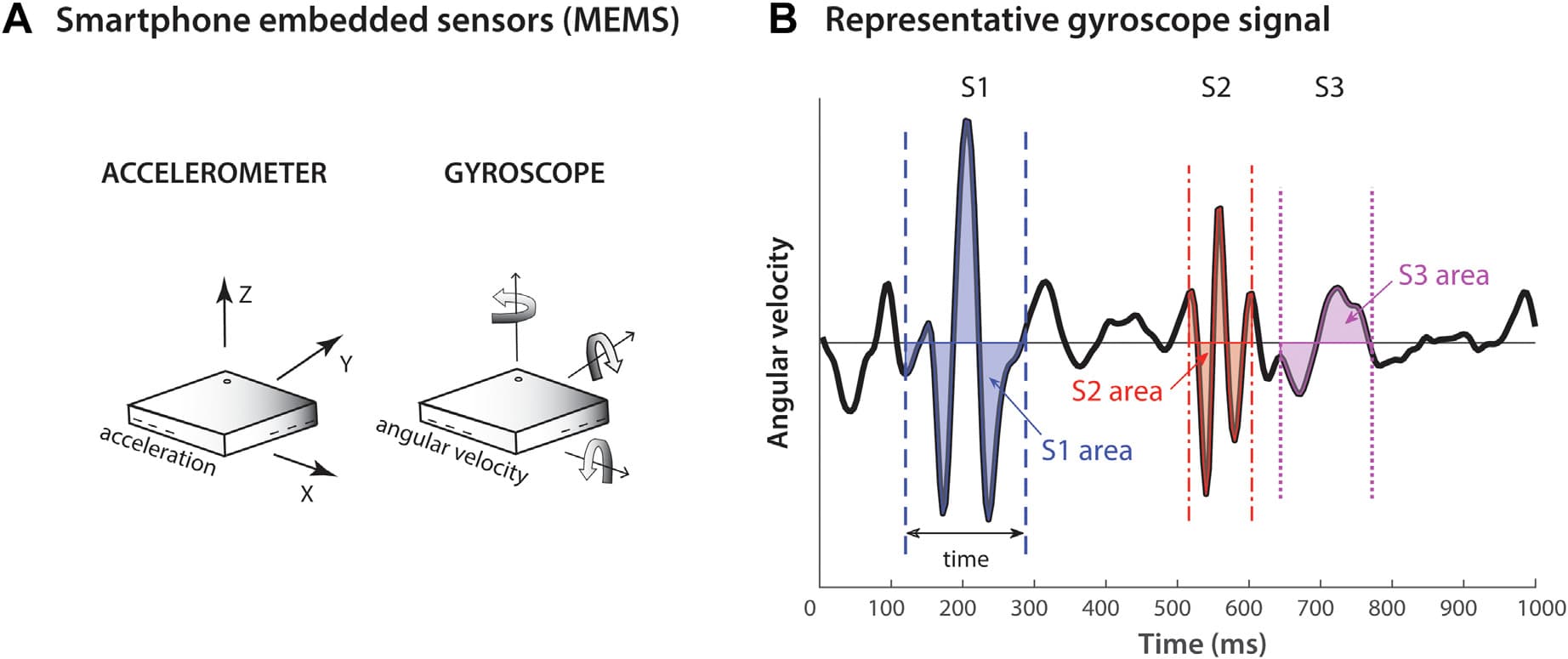
This multicenter study evaluated the feasibility of smartphone-based seismocardiography (SCG) and gyrocardiography (GCG) for detecting heart failure (HF) using embedded microelectromechanical sensors (MEMS). Algorithms derived from accelerometer and gyroscope signals achieved high diagnostic accuracy (AUC 0.95, sensitivity 85%, specificity 90%) across diverse clinical subgroups. The findings suggest that smartphone-based cardiac motion analysis could enable remote HF detection and monitoring with minimal hardware requirements.
Answer Machine Insights
Q: What was the diagnostic accuracy of the smartphone-based algorithms for HF detection?
The algorithms achieved an accuracy of 89%, with sensitivity of 85% and specificity of 90%.
Across both HF cohorts, the algorithms had an area under the receiver operating characteristic curve of 0.95 with a sensitivity of 85%, specificity of 90%, and accuracy of 89% for the detection of HF.
Q: How did gyroscope signals compare to accelerometer signals in HF detection?
Gyroscope signals provided significantly higher diagnostic accuracy than accelerometer signals.
The AUCs were significantly higher for the gyroscope signals compared with the accelerometer signals.
Key Results
The smartphone-based algorithms achieved an AUC of 0.95, sensitivity of 85%, and specificity of 90% for HF detection.
Gyroscope signals provided higher diagnostic accuracy compared to accelerometer signals, emphasizing the importance of rotational dynamics in cardiac motion analysis.
Visual Evidence
Clinical Snapshot
Evidence Rating
Relevance
high Priority