Comparison of Heart Rate Variability Indices Based on Seismocardiograms from Healthy Volunteers and Patients with Valvular Heart Diseases
Executive Summary
This study evaluates heart rate variability (HRV) indices derived from seismocardiograms (SCG) in healthy volunteers and patients with valvular heart diseases (VHD). Using publicly available datasets and signal processing techniques such as the Pan-Tompkins algorithm, the authors demonstrate significant differences in HRV indices like RMSSD, pNN50, HF, and LF/HF between the two groups, confirming the feasibility of SCG-based HRV analysis for VHD monitoring.
Answer Machine Insights
Q: What HRV indices showed significant differences between healthy volunteers and VHD patients?
RMSSD, pNN50, HF, and LF/HF showed significant differences.
The differences between the HRV indices in healthy volunteers and in patients with VHD shown in Table 2 are statistically significant for RMSSD, pNN50, HF, and LF/HF.
Q: What datasets were used in this study?
The CEBS dataset from PhysioNet and the OAVHDDB dataset from Columbia University Medical Center.
We used two publicly available data sets that contain simultaneous recordings of electrocardiograms and seismocardiograms; Combined measurement of ECG, Breathing and Seismocardiograms (CEBS) publicly available on PhysioNet.org and 'An Open-access Database for the Evaluation of Cardio-mechanical Signals from Patients with Valvular Heart Diseases' (OAVHDDB).
Key Results
RMSSD values were significantly higher in VHD patients (160.96 ± 63.30 ms) compared to healthy volunteers (76.53 ± 18.77 ms).
LF/HF ratio was significantly lower in VHD patients (0.32 ± 0.16) compared to healthy volunteers (0.72 ± 0.44).
Visual Evidence
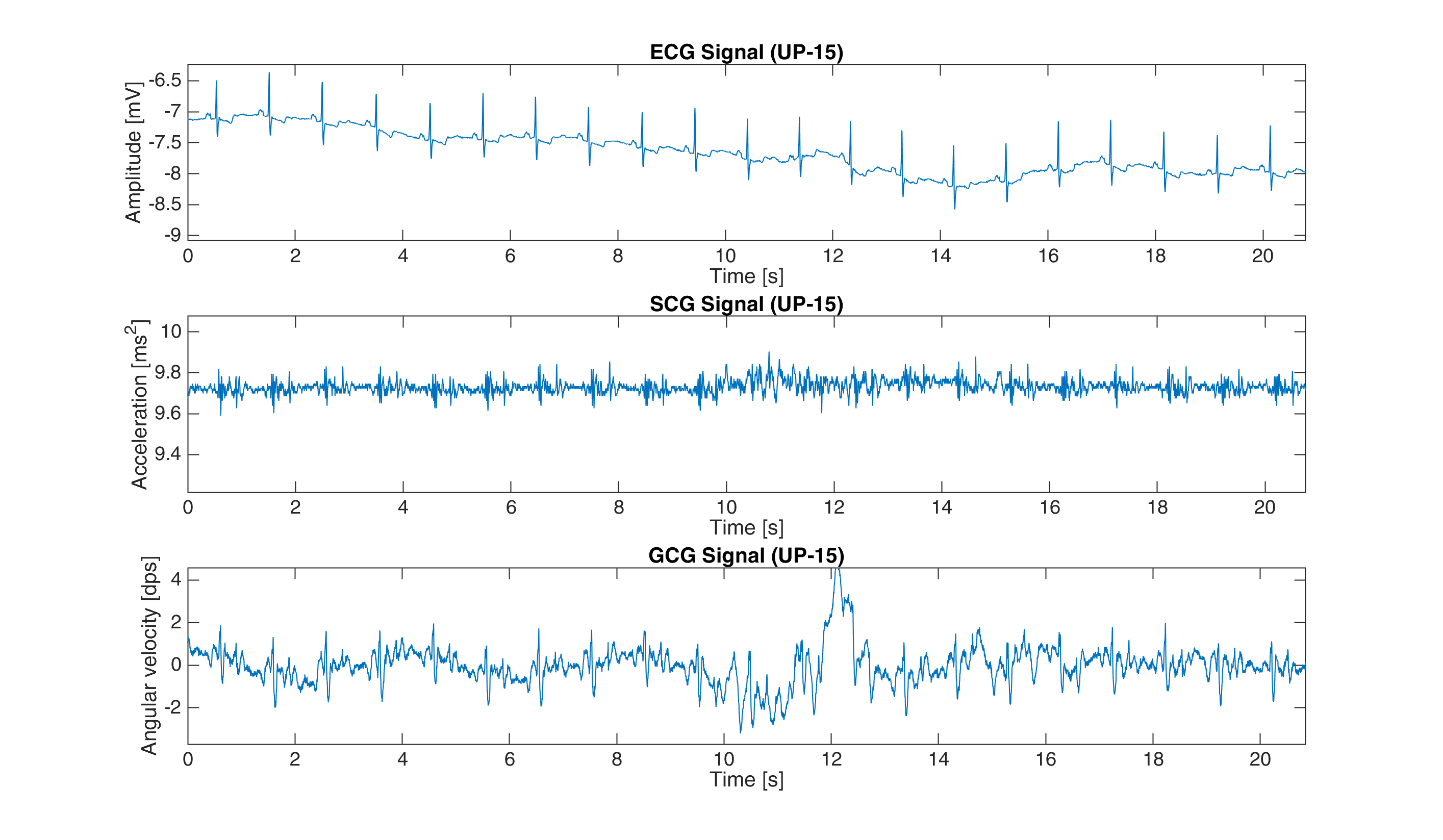
Figure 1. Raw ECG, SCG, and GCG signals from sub- ject 15 in OAVHDDB (first 20 seconds).
Clinical Snapshot
Evidence Rating
Relevance
high Priority