Seismocardiography on Infants and Kids
Executive Summary
This study explores the feasibility of using seismocardiography (SCG) for cardiovascular diagnostics in infants and children, employing a high-resolution system with dual accelerometers and ECG reference signals. Key findings include significant differences in SCG signal amplitudes and morphology between infants and adults, with infant amplitudes being up to five times smaller. The study highlights the potential for SCG to monitor physiological changes across age groups and aims to contribute to an open-data database for pediatric SCG signals.
Answer Machine Insights
Q: What differences were observed in SCG signal morphology between infants and adults?
Infants exhibited SCG amplitudes up to five times smaller than adults, with similar signal morphology.
The infant's SCG amplitude is up to five times smaller, but the actual signal morphology is equal.
Q: What challenges were encountered in measuring SCG signals in children?
Movement artifacts posed significant challenges, despite efforts to minimize them.
Although attempts were made to clean up the data from movement artifacts of the children as best as possible, it cannot be ruled out that these have an influence.
Key Results
Infant SCG amplitudes are up to five times smaller compared to adults.
Higher variance and standard deviation in SCG signals were observed in younger subjects, likely due to movement artifacts.
Visual Evidence
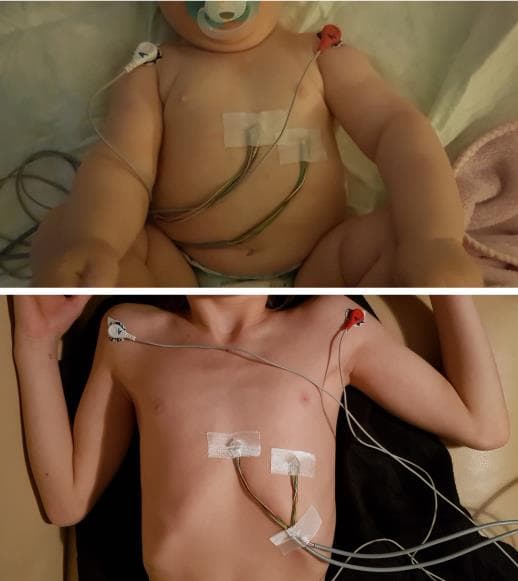
Clinical Snapshot
Evidence Rating
Relevance
high Priority