High-Resolution Seismocardiogram Acquisition and Analysis System.
Executive Summary
This study presents a high-resolution wireless acquisition system for seismocardiogram (SCG) and electrocardiogram (ECG) signals, utilizing a novel MEMS accelerometer with a sensitivity of 0.164 µs/µg and a noise density below 6.5 µg/√Hz. The system was validated through a preliminary clinical study involving 22 subjects, demonstrating strong correlations between SCG-derived metrics and echocardiogram (ECHO) parameters such as left ventricular ejection time (R=0.8218) and stroke volume (R=0.5254). These findings highlight the potential of SCG as a non-invasive, portable alternative for cardiac monitoring in clinical and non-clinical settings.
Answer Machine Insights
Q: What is the sensitivity and noise density of the MEMS accelerometer used in this study?
The MEMS accelerometer has a sensitivity of 0.164 µs/µg and a noise density below 6.5 µg/√Hz.
The SCG signal was measured using a pull-in-time based accelerometer with a sensitivity of up to 0.164 µs/µg and a noise density below 6.5 µg/√Hz.
Q: How does the SCG-derived AO-AC interval correlate with ECHO-derived left ventricular ejection time?
The SCG-derived AO-AC interval shows a strong correlation with ECHO-derived left ventricular ejection time (R=0.8218, p<0.05).
In this preliminary study, a strong association with the ejection time measured from ECHO and the AO-AC interval extracted from SCG signals, is evidenced by the correlation coefficient (R=0.8218 (p<0.05)).
Key Results
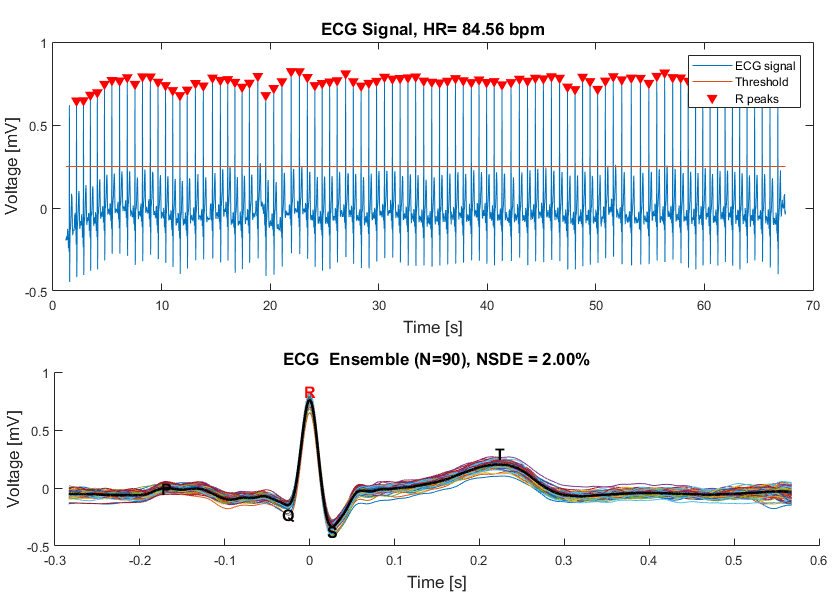
Correlation coefficient of R=0.993 (p<0.05) between heart rate measurements from SCG and ECG.
Strong correlation (R=0.8218, p<0.05) between SCG AO-AC interval and ECHO-derived left ventricular ejection time.
Visual Evidence
Clinical Snapshot
Evidence Rating
Relevance
high Priority