Near Real-Time Implementation of An Adaptive Seismocardiography – ECG Multimodal Framework for Cardiac Gating
Executive Summary
This study presents a near real-time implementation of a multimodal framework combining seismocardiography (SCG) and electrocardiography (ECG) for cardiac gating in computed tomography angiography (CTA). The methodology integrates commercial hardware and software platforms, achieving improved quiescence prediction accuracy compared to ECG-only methods, with an average prediction error reduction from 59.58 ms to 27.24 ms. Clinical implications include enhanced diagnostic quality and reduced radiation exposure during CTA imaging.
Answer Machine Insights
Q: How does the SCG-ECG framework improve cardiac gating accuracy?
The multimodal framework reduces prediction error from 59.58 ms to 27.24 ms compared to ECG-only methods.
The average prediction error associated with conventional ECG-only versus SCG-ECG-based method over all subjects were 59.58 ms and 27.24 ms, respectively.
Q: What is the latency introduced by the SCG-ECG framework?
The total latency introduced by computerized processing is 5.1 ms.
The estimated total latency of 5.10 ms introduced by computerized processing is within a 100 ms tolerance.
Key Results
Average prediction error reduced from 59.58 ms (ECG-only) to 27.24 ms (SCG-ECG).
Total latency introduced by computerized processing was 5.1 ms, well within the 100 ms tolerance.
Visual Evidence
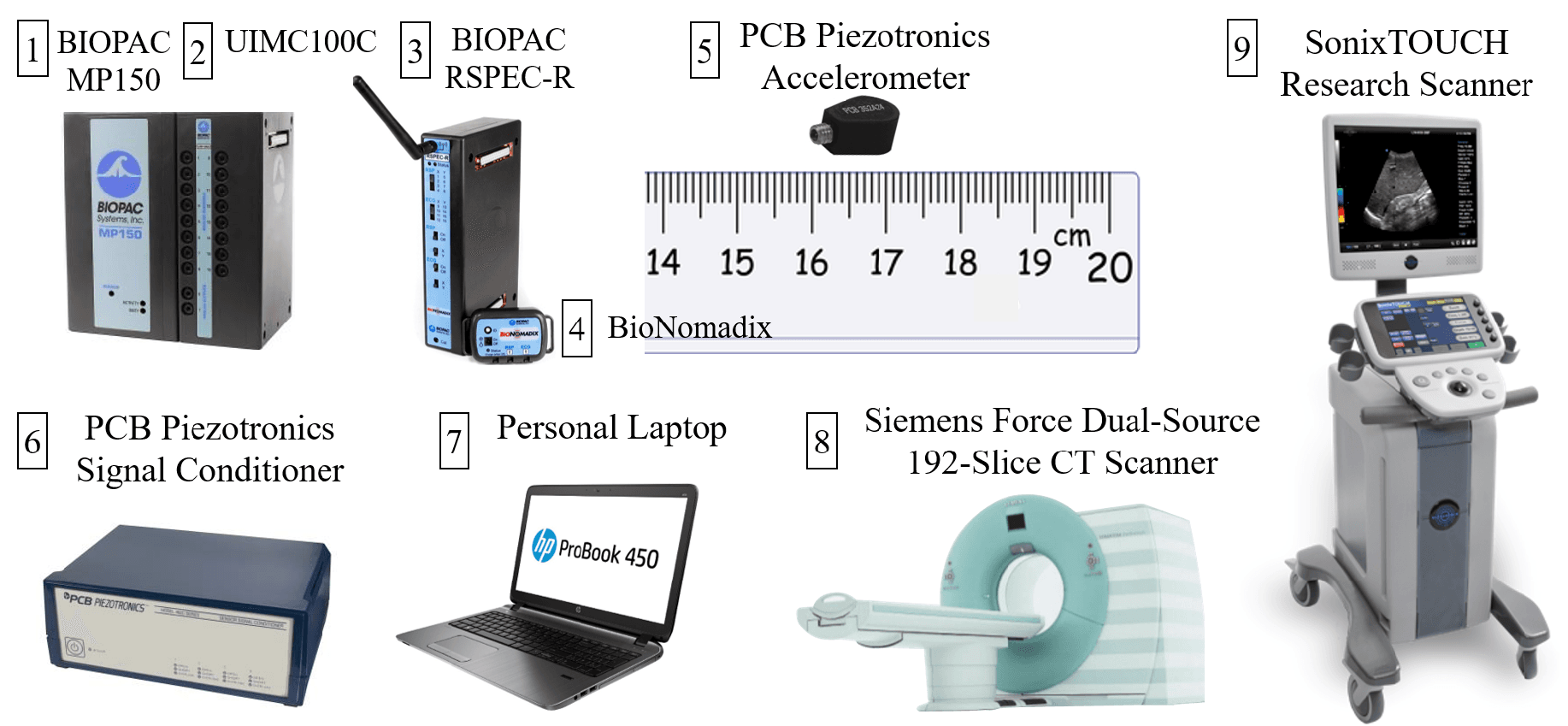
Clinical Snapshot
Evidence Rating
Relevance
high Priority