Multi-site cardiac rhythm monitoring via multi-channel SCG system and exercise-induced physiological analysis
Executive Summary
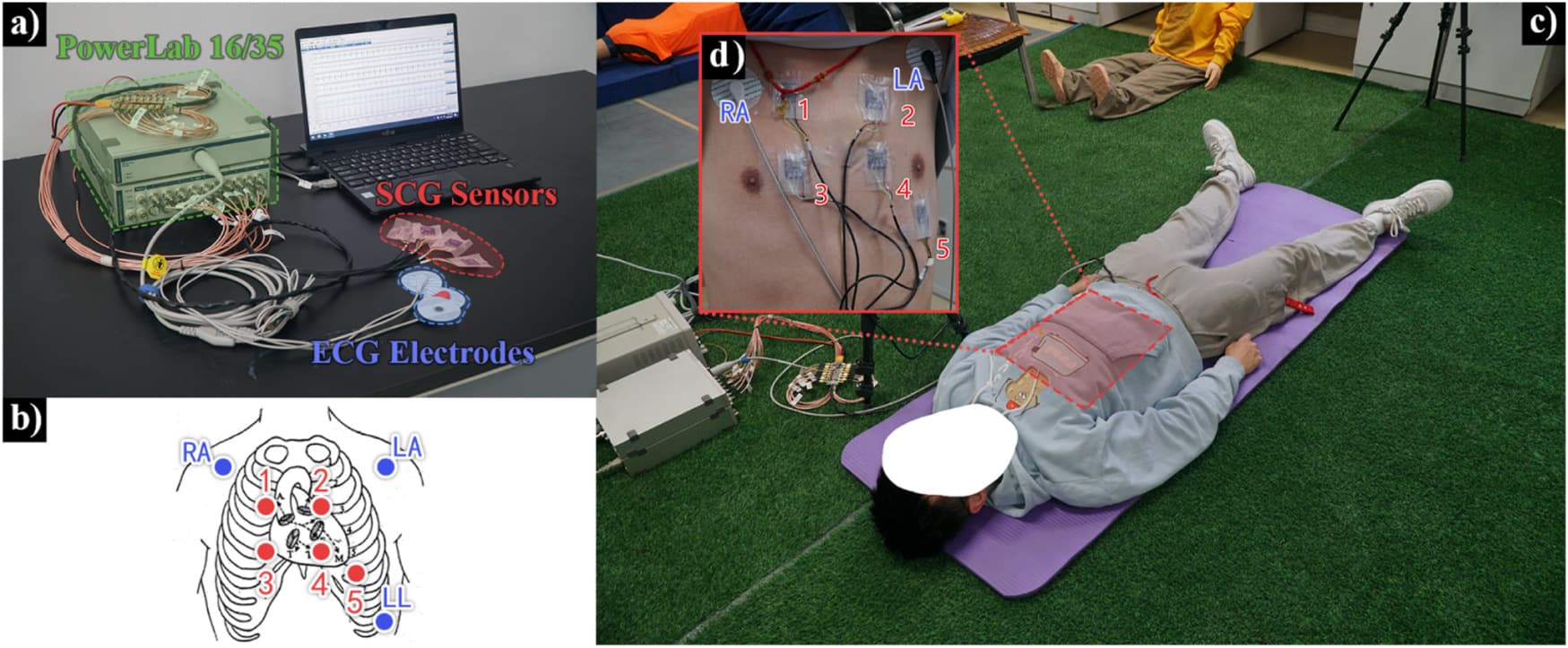
This study introduces a multi-channel seismocardiography (MSCG) system integrated with electrocardiography (ECG) for spatiotemporal monitoring of cardiac vibrations across thoracic sites. Using a custom-built acquisition system, the study identifies exercise-induced shifts in cardiac cycle feature points, such as aortic valve closure (AC) and mitral valve opening (MO), across multiple channels. These findings highlight the potential of MSCG for non-invasive assessment of cardiac function under exertion and pathological conditions involving altered ventricular dynamics.
Answer Machine Insights
Q: What physiological changes were observed in cardiac feature points post-exercise?
Post-exercise, the AC and MO feature points shifted earlier across all channels, reflecting shortened systolic and diastolic durations.
The results indicate that, for all subjects and across all five channels, the AC and MO points shifted earlier after exercise.
Q: How does multi-channel SCG improve upon single-channel methods?
Multi-channel SCG provides spatially resolved data, enabling chamber-specific monitoring and detection of mechanical timing shifts undetectable by single-channel approaches.
The spatiotemporal disparities across MSCG channels indeed correspond to the distinct physiological activities of the underlying cardiac chambers.
Key Results
Exercise-induced shifts in AC and MO feature points were consistently observed across all channels, indicating shortened cardiac phases.
The mitral valve site exhibited the earliest MC point during rest, but spatial variability was noted for other feature points.
Visual Evidence
Clinical Snapshot
Evidence Rating
Relevance
high Priority