A seismocardiography system and a possibility of its use for diagnosis of internal organs diseases using seismocardiogram information analysis
Executive Summary
This study presents the development of a cardioseismometer system for capturing seismocardiograms (SCG) and analyzing their signals to diagnose internal organ diseases. The methodology includes simultaneous ECG and SCG signal acquisition, signal processing algorithms for compensating noise and body movement, and comparative analysis of SCG and ECG variability parameters. Key findings demonstrate parallelism in the dynamics of SCG and ECG parameters, suggesting SCG's potential as a diagnostic tool for cardiovascular and internal organ diseases.
Answer Machine Insights
Q: What is the main advantage of SCG over ECG?
SCG does not require electrodes or cables, making it suitable for non-standard conditions.
The absence of electrodes and electrode cables for seismocardiogram registration gives it a certain advantage over the electrocardiograph if it is necessary to register the cardiogram in non-standard conditions.
Q: How does SCG signal variability compare to ECG?
SCG and ECG show parallelism in time interval variability, though amplitude variability requires further investigation.
There is a coincidence between ECG and SCG time intervals increments, that confirms the assumption made in the introduction about the same nature of mechanical and electrical heart activity.
Key Results
Parallelism observed between SCG and ECG variability parameters, including amplitude and time intervals.
SCG signal processing algorithms successfully compensate for body movement and external noise.
Visual Evidence
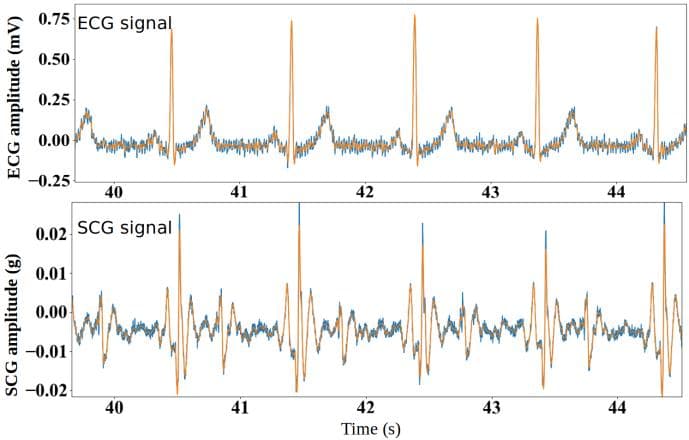
Figure 5. An example of simultaneously recorded ECG and SCG
Clinical Snapshot
Evidence Rating
Relevance
high Priority