Extracting Cardiovascular-Induced Chest Vibrations from Ordinary Chest Videos: A Comparative Study
Executive Summary
This study evaluates three computer vision methods—Lucas-Kanade optical flow, template tracking, and Gunnar-Farneback optical flow—for extracting seismocardiography (SCG) signals from chest videos recorded with an ordinary smartphone. Using data from 13 healthy subjects, the Lucas-Kanade and template tracking methods demonstrated superior accuracy and correlation with gold-standard accelerometer signals, particularly in the head-to-foot direction. These findings highlight the potential of vision-based SCG techniques as non-contact alternatives for cardiac monitoring.
Answer Machine Insights
Q: Which computer vision method performed best in extracting SCG signals?
The Lucas-Kanade and template tracking methods performed comparably and better than the Gunnar-Farneback method, particularly in the head-to-foot direction.
Visual and quantitative analyses showed that the Lucas-Kanade and template tracking methods estimated vision-based SCG signals closely resembling the accelerometer data, particularly in the head-to-foot direction.
Q: What is the significance of the head-to-foot direction in SCG signal extraction?
Head-to-foot vibrations are more pronounced and easier to detect, leading to lower error metrics and higher correlation values for vision-based methods.
The lower MSE and RMSE values, along with higher correlation values in the head-to-foot direction suggest that vertical vibrations are more accurately captured by vision-based methods than horizontal vibrations.
Key Results
Lucas-Kanade method achieved average correlation values of 0.82±0.09 in the head-to-foot direction.
Template tracking method showed average correlation values of 0.83±0.10 in the head-to-foot direction.
Visual Evidence
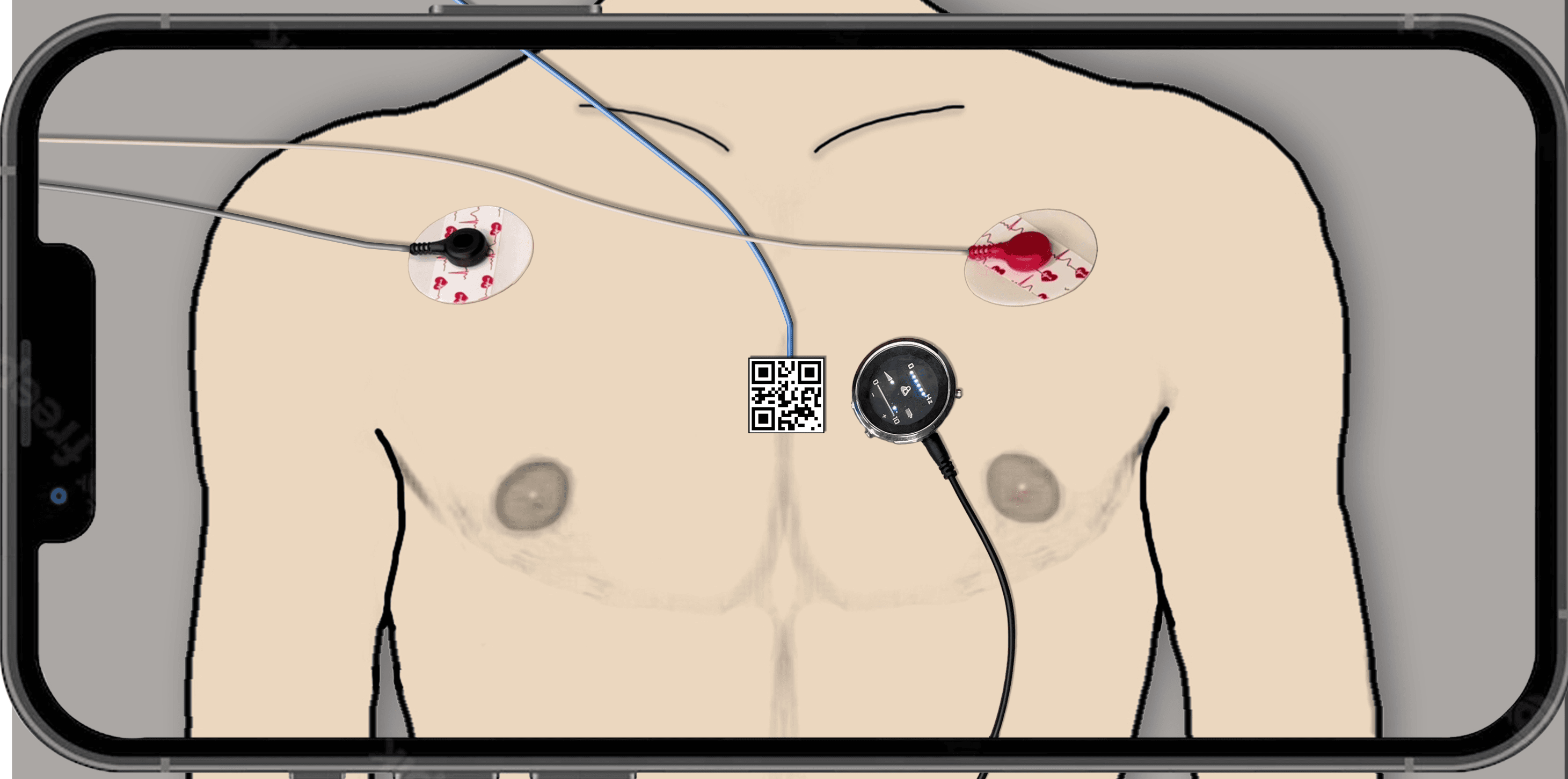
Figure 1. Data acquisition and sensor placement setup. Chest videos were recorded using an ordinary camera phone. Simul- taneously, an accelerometer was used to record SCG signals. A sticker patterned with a QR code was attached to the top face of the accelerometer to facilitate the extraction of SCG signals from the chest videos.
Clinical Snapshot
Evidence Rating
Relevance
high Priority