Revolutionizing smartphone gyrocardiography for heart rate monitoring: overcoming clinical validation hurdles
Executive Summary
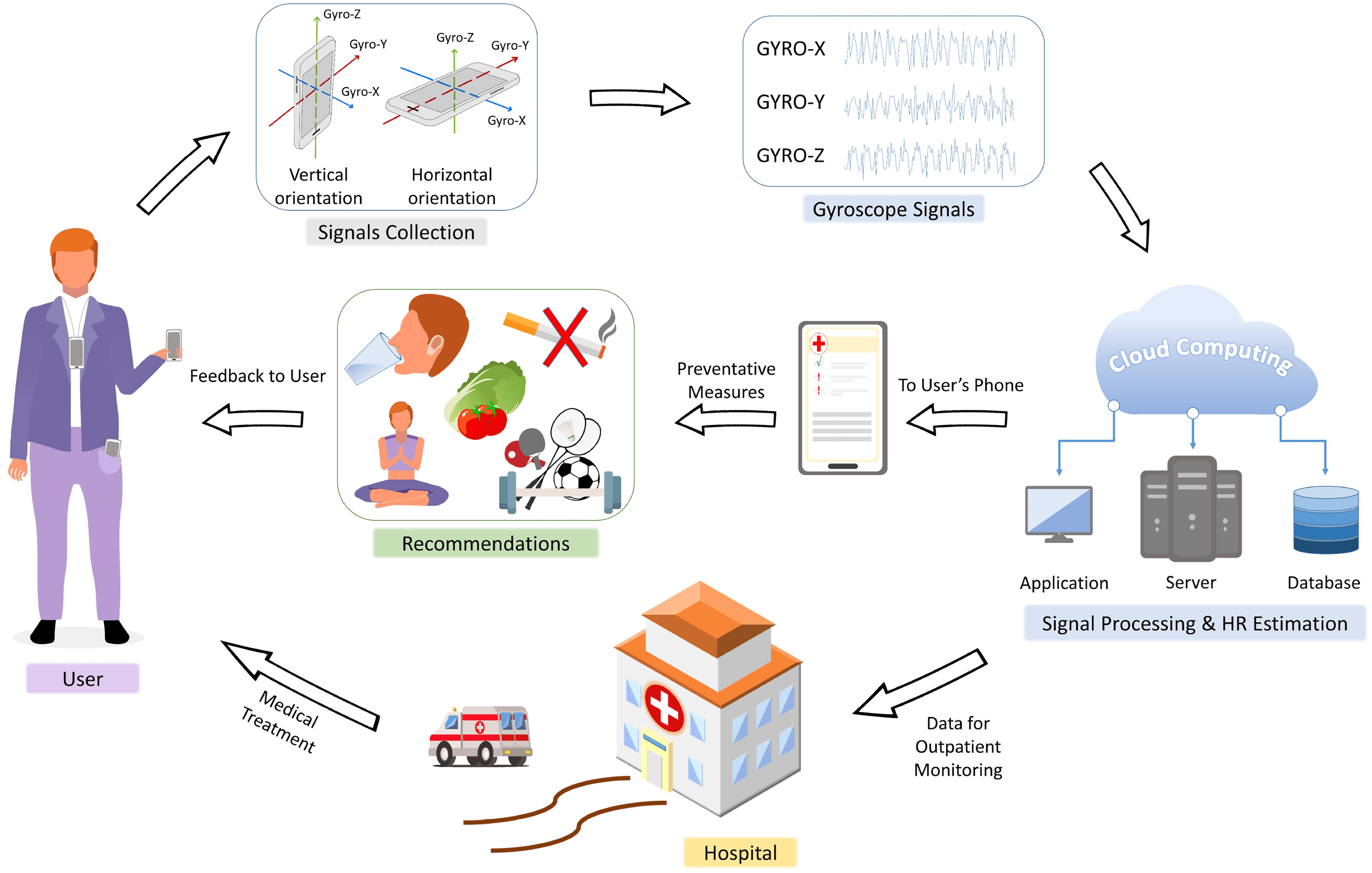
This perspective article explores the potential of smartphone-based gyrocardiography (GCG) for heart rate monitoring, emphasizing its advantages over traditional methods like ECG and PPG in terms of sensitivity and independence from motion artifacts. The authors propose a standardized workflow for GCG signal processing and introduce four evaluation metrics—MAE, RMSE, Pearson correlation coefficient, and equivalence testing—to ensure robust validation. Clinical implications include the potential for widespread, non-invasive heart rate monitoring using smartphones, with applications in personalized health tracking and emergency response systems.
Answer Machine Insights
Q: What are the advantages of GCG over SCG for heart rate monitoring?
GCG signals are less affected by gravity and user posture, and proper axis selection can enhance accuracy beyond SCG signals.
Since gyroscope measurements are not affected by gravity, GCG signal collection is largely independent of the user’s position or posture; in addition proper axis selection could even result in GCG signals outperforming a combination of GCG and SCG signals for heart rate estimation.
Q: What challenges must be addressed for smartphone-based GCG heart rate monitoring?
Challenges include motion artifacts, gyroscope drift errors, and the need for clinical validation with diverse participant pools.
One of the primary hurdles in employing gyro sensors for heart rate detection is the presence of motion artifacts produced by activities such as walking, running, or even typing. Additionally, gyro bias error, inherent to MEMS sensors, is a significant factor in gyroscope drift error and can lead to inaccurate readings.
Key Results
Gyrocardiography captures up to 60% of cardiac vibrational energy, outperforming accelerometer-based methods.
Proposed evaluation metrics include MAE, RMSE, Pearson correlation coefficient, and equivalence testing for robust validation.
Visual Evidence
Clinical Snapshot
Evidence Rating
Relevance
high Priority