Estimation of cardiorespiratory fitness in healthy using seismocardiography
Executive Summary
This study introduces a novel algorithm for estimating maximal oxygen consumption (V̇O2max) using seismocardiography (SCG) signals combined with demographic data. The SCG-based method demonstrated high correlation (r = 0.873) with traditional cardiopulmonary exercise (CPX) testing and superior performance compared to the FRIEND Equation, with improved reproducibility and classification accuracy. The findings suggest SCG-V̇O2max as a cost-effective, non-exercise alternative for assessing cardiorespiratory fitness in clinical settings.
Answer Machine Insights
Q: How does SCG-V̇O2max compare to CPX testing in terms of reproducibility?
SCG-V̇O2max showed higher reproducibility (ICC = 0.98) compared to CPX testing (ICC = 0.951).
The reproducibility of the SCG estimates was higher than the reproducibility of the ergometer CPX measures, Fig. 2.
Q: What is the main advantage of SCG-V̇O2max over the FRIEND Equation?
SCG-V̇O2max demonstrated lower bias, higher correlation, and improved classification accuracy for cardiorespiratory fitness levels.
The SCG-V̇O2max had a lower bias, higher correlation, lower SEE and lower percent-wise error in MAPE.
Key Results
Correlation between SCG-V̇O2max and CPX V̇O2max was r = 0.873 in the test set.
SCG-V̇O2max classified 77.3% of subjects correctly into cardiorespiratory fitness groups compared to 59.0% by the FRIEND Equation.
Visual Evidence
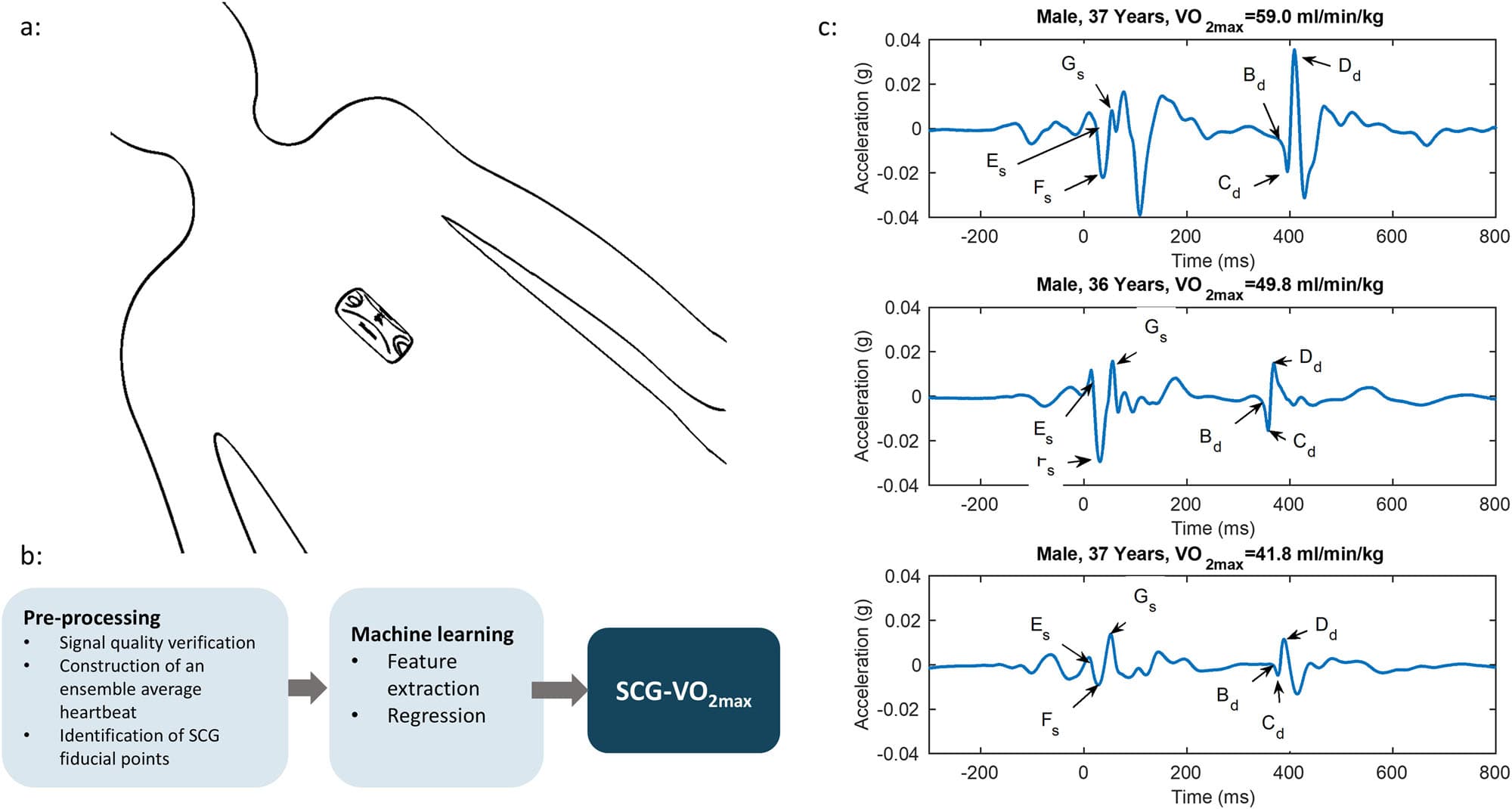
Fig. 3 | Sensor and signal overview. a The SCG sensor is mounted at the lower sternum. b Overview of the algorithm steps. c Ensemble average SCG waveforms from three subjects with different levels of fitness. The Es fiducial point marks the
Clinical Snapshot
Evidence Rating
Relevance
high Priority